Researched buying guide. We have not tested the products or product types described here. Last reviewed: 15 November 2026.
Seat covers protect upholstery and change how your car looks and feels. The short answer: choose the material for how you use the car, choose a fit that suits your seats, and, most importantly, confirm the covers are compatible with your seats’ airbags.
Who this guide is for
- Owners protecting seats from wear, spills, pets or children.
- Drivers who want a different look or feel.
Check airbags first
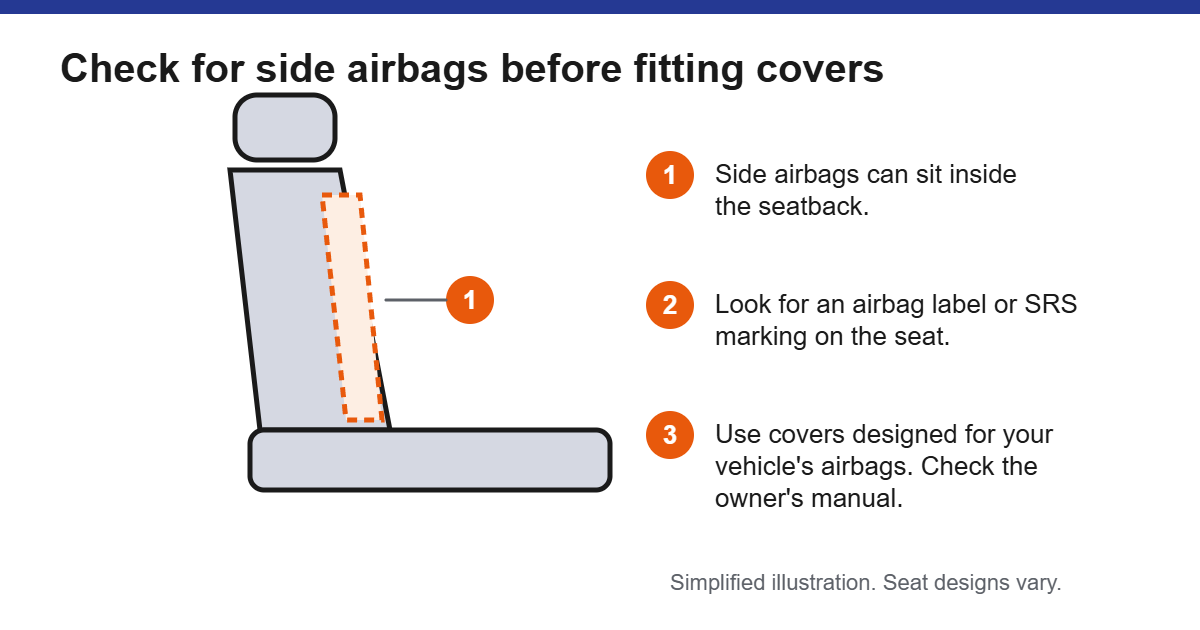
Some cars have side airbags built into the seatbacks, depending on the model and variant. Vehicle manuals warn that covers not designed for the car can interfere with airbag deployment. For example, the India edition of a Kia owner’s manual tells owners not to use accessory seat covers, because they could reduce or prevent the side airbag system from working. Some seats are marked with an airbag label. Seat sensors can also be affected by covers.
- Read your owner’s manual for what it says about seat covers.
- Look for seat labels showing airbags.
- Buy covers that state they are airbag-compatible for your model, and follow the installation instructions.
- If unsure, ask your dealer or the manufacturer.
Seat covers in India: check your own variant
- Ask your authorised dealer. The same model can be sold with and without side airbags, depending on the variant. Ask the dealer whether your variant has seat airbags and whether any covers are approved for it.
- Get it in writing from the fitter. If a local shop makes custom covers, ask how the cover is designed around the airbag seam, and ask for the airbag compatibility claim in writing.
- Shop listings are not a manual. A marketplace listing that says “universal” or “airbag compatible” does not replace your owner’s manual.
Materials compared
| Material | Good for | Watch out for |
|---|---|---|
| Fabric or polyester | Affordable, breathable | Can stain, may wear faster |
| Neoprene | Water resistance, active use | Can feel warm in hot weather |
| Faux leather or leatherette | Easy to wipe clean, smart look | Can get hot or sticky in heat |
| Real leather | Premium feel | Cost and care |
| Mesh or ventilated | Airflow in warm climates | Less protection from spills |
Fit
- Universal: cheaper, but may not match your seats’ shape and can slip.
- Semi-custom or custom: made for specific models, usually a better fit.
Check head restraints, folding rear seats, armrests, heated or ventilated seats and seatbelt access.
How to check what you need
- Seat layout: note whether the rear seat is a bench or split-folding, and whether head restraints and armrests are fixed or adjustable.
- Model and year: trim levels of the same model can have different seat shapes, side airbags or sensors.
- Extras: check for heated or ventilated seats, seat-mounted controls and seat memory.
- Which seats: front only, rear only, or the whole car.
Choosing by climate and use
| Situation | Worth considering |
|---|---|
| Hot, humid climate | Breathable fabric or mesh. Faux leather can feel hot and sticky for some people, and dark colours get hotter in a car parked in the sun. |
| Monsoon | Water-resistant, quick-drying material. Wet seats and covers can trap damp, so dry them out when you can. |
| Cold climate | Fabric or neoprene often feels warmer to sit on than smooth synthetic surfaces. |
| Pets and children | Water-resistant, wipeable material, and a cover that does not block seatbelts or child-seat anchor points |
| Work or heavy use | Durable, easy-to-clean material |
Child seats and seat belts
Seat covers must not get in the way of seat belts or child-seat anchor points. If you use a child seat, check the child seat’s manual and your vehicle’s manual before fitting covers underneath.
Installing them
- Read the instructions before you start, and check the pack for every part.
- Remove or adjust head restraints as instructed.
- Pull the cover smoothly over the seat, and secure straps and hooks according to the instructions, without crossing over airbag seams.
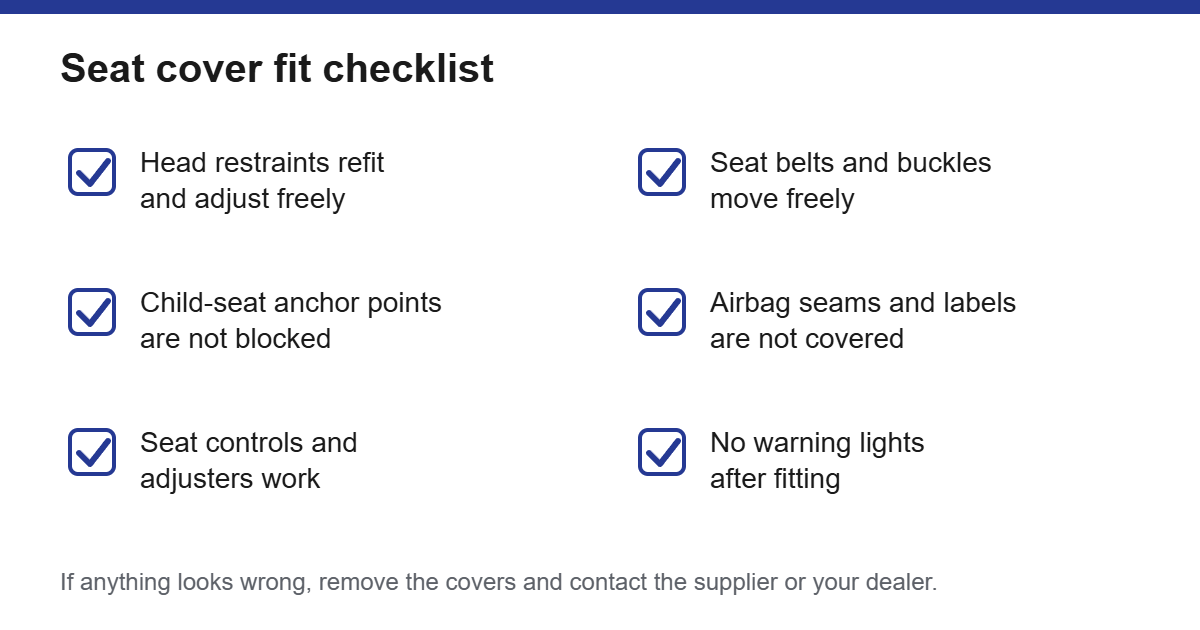
- Refit head restraints, and check that all seat adjustments and belts work freely.
- Check for warning lights on the dashboard, then re-tighten after a short time.
Warning signs that the fit is wrong
- A seat or airbag warning light appears after fitting.
- The cover bunches, slips or twists.
- Seat controls or belts do not move freely.
- Seams or panels cover the airbag label or area when they should not.
If any of these happen, remove the covers and contact the supplier or your dealer.
Cleaning and care
Care depends on the material, so follow the maker’s instructions. Wipeable synthetic covers usually need a damp cloth, while fabric covers may be machine washable. Do not use harsh chemicals unless the maker says they are safe.
Mistakes to avoid
- Ignoring airbag compatibility.
- Buying universal covers for seats with complex shapes.
- Covering heated or ventilated seats without checking compatibility.
- Skipping installation instructions.
Who may not need them
- Owners whose seats already have durable, easy-to-clean upholstery and who do not need extra protection.
Checklist before you buy
- Check your manual and seat labels for airbags.
- Choose material for your climate and use.
- Choose universal or custom fit.
- Check compatibility with heated seats, folding seats and seatbelts.
- Read the installation instructions.
Frequently asked questions
Can seat covers affect airbags?
Yes, covers not designed for your car’s side airbags can interfere with deployment, according to vehicle manuals. Check compatibility.
Are custom covers worth it?
They usually fit better, but cost more.
Do seat covers affect heated seats?
They can. Check whether the covers are designed to work with heated or ventilated seats, and follow the maker’s guidance.
Can I fit them myself?
Many people do, but allow time and follow the instructions carefully. If airbags or sensors are involved, consider asking a professional installer.
Are covers safe with seat sensors?
Seat sensors can be affected by covers. Check the vehicle manual and the cover’s specifications.
Conclusion
Airbag compatibility comes first, then material and fit. When we add specific recommendations, they will be clearly labelled.
Related guides
- Browse more in Car Interior.
Sources
- Kia: owner’s manual, India edition, side air bag warning (accessory seat covers).
- Always rely on your own vehicle’s manual and your authorised dealer. Seat cover seller blogs are a secondary source.