Researched buying guide. We have not tested the products or product types described here. Last reviewed: 15 November 2026.
An organiser can turn a messy car into a tidy one, but anything you store in a car can become a hazard in a sudden stop. The short answer: choose organisers that hold light items, keep heavy things in the boot, keep them clear of airbags, seat belts and pedals, and check the fit in your own car before you rely on them.
Who this guide is for
- Drivers tired of loose items rolling around the floor and seats.
- Families who carry bottles, snacks, toys and documents.
- Anyone choosing between boot, seat-back and console organisers.
Types of organiser
| Type | Good for | Watch out for |
|---|---|---|
| Boot organiser | Tools, jump leads, cleaning kit, shopping | Needs to be secured so it does not slide. Heavy items belong here, low down. |
| Seat-back organiser | Light items for rear-seat passengers, such as tissues and snacks | Hangs from the headrest posts. Keep it light, and clear of seat belts and airbags. |
| Console or seat-gap organiser | Stops phones and coins falling between seats | Check it does not block the seat controls, the handbrake or the belt buckle. |
| Door and sun-visor pockets | Documents, sunglasses, small items | Heavy items can pull a visor down. Check the fit. |
| Dashboard tray or mat | Keys and small items | Items can slide off in braking and fall into the footwell. Check nothing can reach the pedals. |
The safety point most guides skip
In a sudden stop or a crash, loose objects keep moving at the speed the car was travelling. Any item stored in a seat pocket or on a seat can become a projectile. Safety guidance for families makes the same point: stow hard, heavy items in the boot or in a closed compartment, not in seat-back pockets.
- Keep it light. Use seat-back organisers for soft, light items. Avoid metal bottles, tools and hard toys.
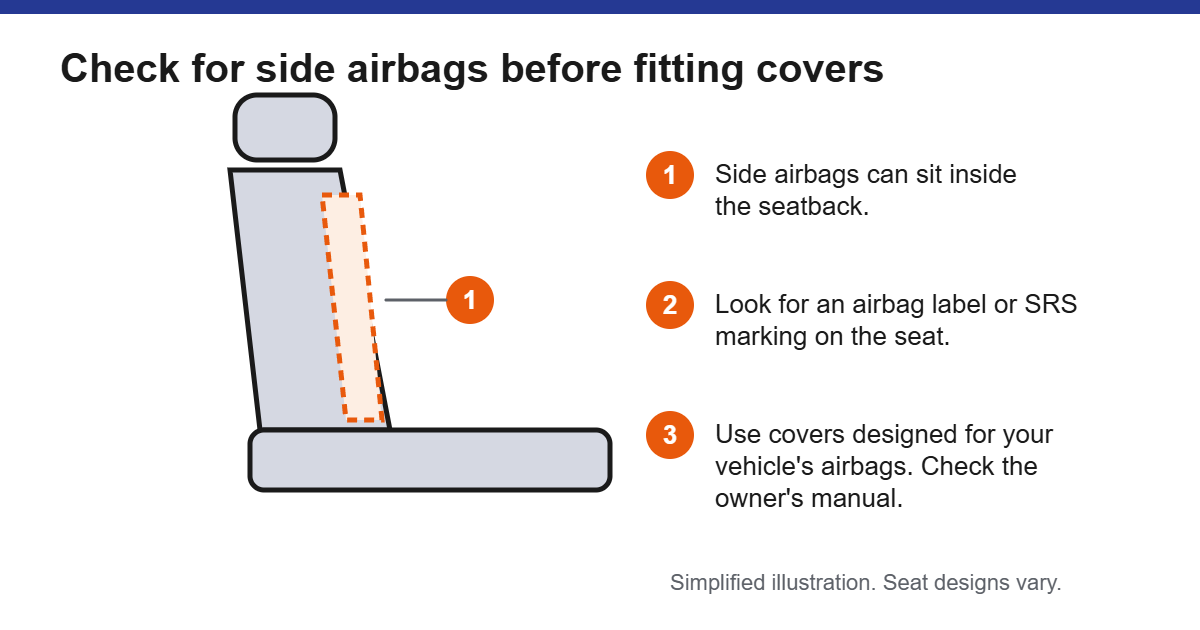
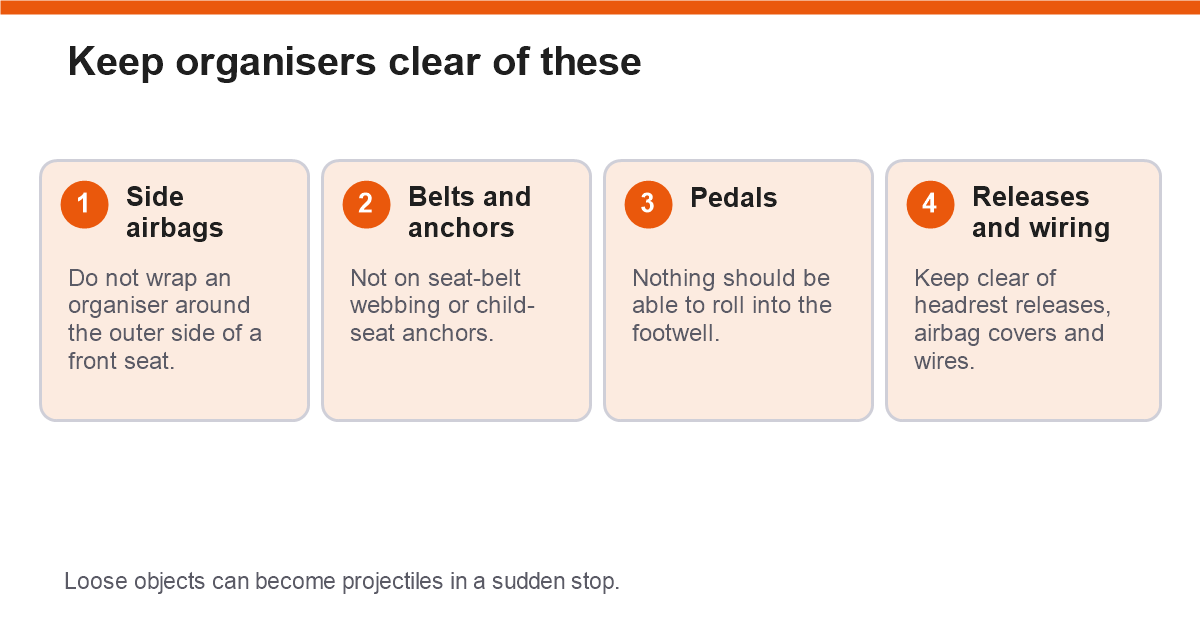
- Airbags. Some seats have side airbags in the seatback. An organiser that wraps around the outer side of a front seat could get in the way of a deploying airbag. Check your owner’s manual for airbag locations, and see our seat covers guide for the same point.
- Attachment points. Do not hang an organiser from a child-seat anchor, seat-belt webbing, an airbag cover, a headrest release or wiring.
- Headrest hooks. Organisers that hang from headrest posts can break loose, so check the straps and the load.
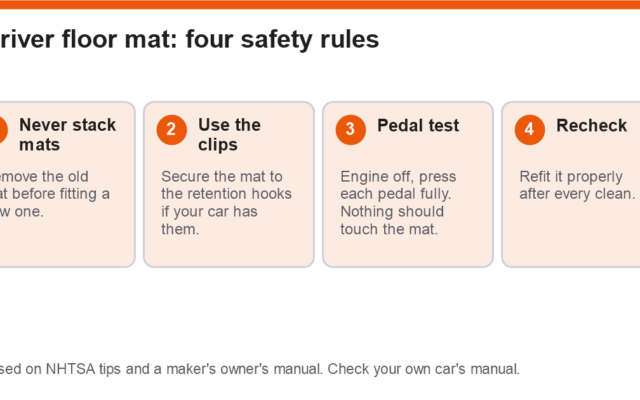
- Pedals. Never leave a bottle or item where it can roll under the pedals.
Check the fit
- Measure the space, or check the maker’s stated sizes against your seats and boot.
- Check how it attaches: straps, hooks, a non-slip base, or Velcro.
- Sit in the car with it fitted. It should not touch the front seat’s controls or restrict rear legroom.
- Check seat adjustment, folding rear seats and rear-seat head restraints still work.
Materials and build
- Check stitching and the straps that carry the load. Thin straps tear under weight.
- A washable fabric, or one that can be wiped clean, is easier with children.
- In Indian heat, avoid materials that smell or sag when warm. Check reviews about odour and shape.
Good habits
- Decide what really needs to be in the car, and what can stay at home.
- Put heavy and hard items in the boot, low and in the centre.
- Keep the footwell and the area around the pedals clear.
- Empty seat pockets regularly, so old rubbish does not build up.
- Keep documents in a single, easy-to-reach place. See our road trip checklist for what to carry.

Mistakes to avoid
- Overloading a seat-back organiser with heavy items.
- Wrapping an organiser around the side of a front seat.
- Attaching organisers to seat belts or child-seat anchors.
- Leaving items loose on the rear shelf or the seat.
- Buying on photos without checking the size and the straps.
Who may not need one
If you travel light and your car has enough built-in storage, you may not need an organiser. A small boot tray or a few cloth bags can do the same job.
A quick checklist before you buy
- Decide where you need storage: boot, seat back or console.
- Check the size and how it attaches.
- Check it stays clear of airbags, belts and pedals.
- Check the strap and stitching quality.
- Plan to keep heavy items in the boot.
Frequently asked questions
Are seat-back organisers safe?
They can be, if they hold light items and stay clear of safety equipment. Heavy or hard items can become projectiles in a crash.
Can an organiser block an airbag?
One that wraps around the outer side of a front seat could. Check your owner’s manual for the airbag positions.
What should go in the boot?
Heavy items, tools, bottles and anything hard. Keep them low and secured.
Do I need a boot organiser?
It helps stop items sliding around. Choose one with a non-slip base or straps.
Conclusion
Choose light, well-fitting organisers, keep heavy things in the boot, and keep everything clear of airbags, belts and pedals. When we add specific recommendations, they will be clearly labelled.
Related guides
- Car seat covers: materials, fit and buying tips
- Car floor mats: types and buying guide
- Browse more in Car Interior.
Sources
- Safe in the Seat: Tips to keep your car organized (loose items and storing heavy objects).
- Evenflo: Projectiles: loose items in your car.
- Motor1: Is this backseat organizer a safety hazard? (headrest-hung organisers).
- These are consumer-safety and news pages. We found no official source on seat-back organisers specifically, so use your owner’s manual for airbag locations.