Researched buying guide. We have not tested the products or product types described here. Last reviewed: 16 November 2026.
A car cover keeps off sun, dust, bird droppings and rain, but a badly chosen or badly fitted one can scratch the paint or trap moisture. The short answer: choose a cover that fits your car closely, with a soft lining and breathable fabric, use it on a clean, dry, cool car, and skip it if you only park for short stretches.
Who this guide is for
- Owners who park outdoors in a society, on the street or in an open compound.
- Anyone worried about strong sun, dust and the monsoon.
- Owners choosing between a custom-fit and a universal cover.
Is a cover right for you?
| Your situation | Worth considering |
|---|---|
| Parked outdoors for long periods | A properly fitted cover can help against sun, dust and bird droppings. |
| Parked indoors | A light, soft, breathable dust cover is enough. |
| Parked and used daily | Putting a cover on and off every day can be a chore, and a dirty cover can scratch. Many owners skip it. |
| Strong wind | Needs a snug fit and straps, or the cover flaps and rubs. |
Fit: custom or universal
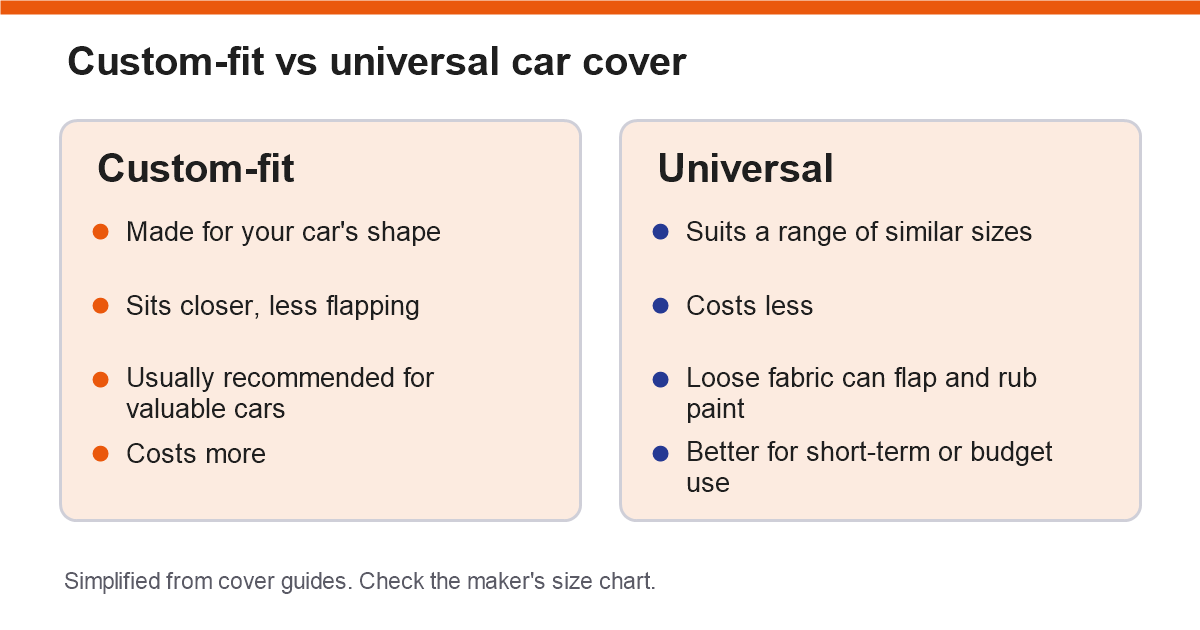
- Custom-fit covers are made for your car’s shape and usually sit closer. Guides we read recommend them for valuable cars.
- Universal covers suit a range of similarly sized cars and cost less, but often leave loose fabric that flaps in wind, which can wear the seams and rub the paint around door handles, mirrors and badges.
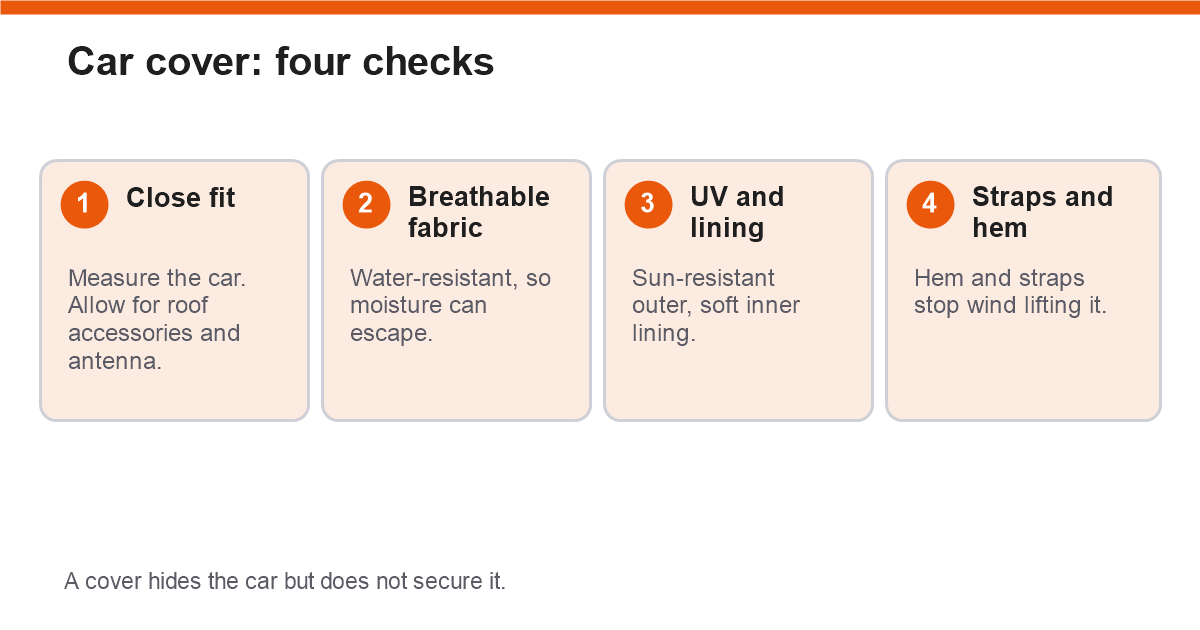
- Measure your car’s length, width and height, and compare with the maker’s size chart. Allow for roof racks, spoilers and a roof antenna.
- Check there is an elasticated hem, and straps or buckles under the car.
Material: breathable and water-resistant
Trapped moisture is the main concern. A fully waterproof, non-breathable cover can hold damp air against the paint. Guides we read favour covers that are water-resistant and breathable, so moisture can escape. Check the maker’s description, and avoid sealed plastic or vinyl sheets for long periods.
- UV resistance. Strong sun can fade cheap fabric and the paint under it. Check the maker’s stated UV protection.
- Soft lining. A soft inner layer is kinder to the paint than a rough one.
- Seams and stitching. They fail first in wind and rain.
- Colour. A light-coloured cover reflects more sun than a dark one.
Putting a cover on safely
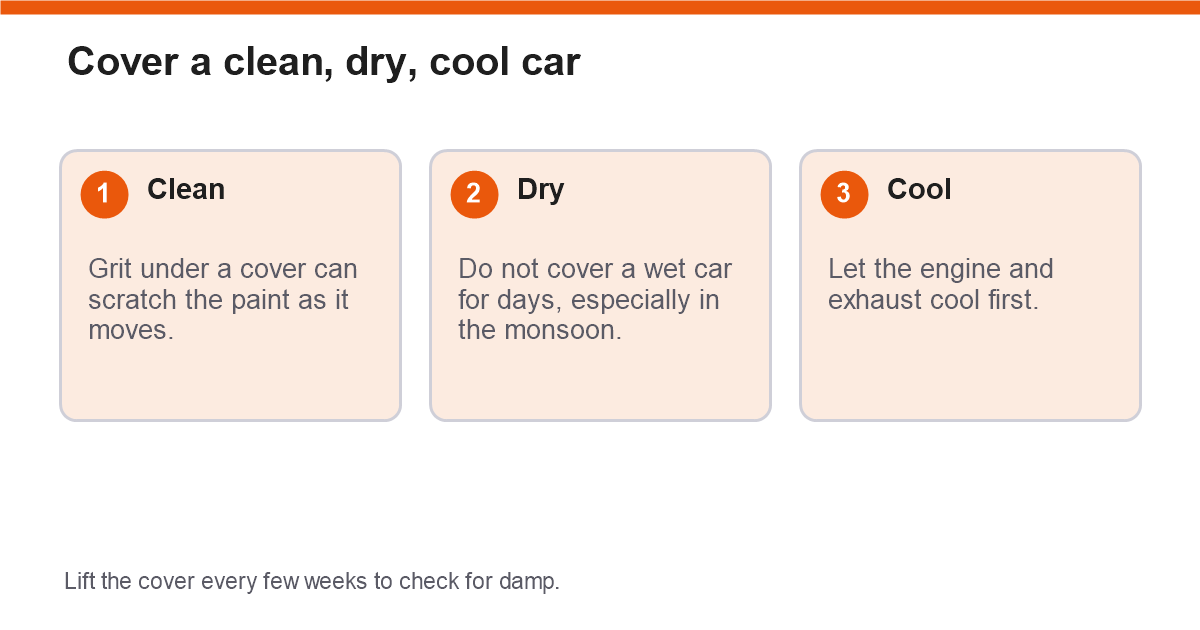
- Wash and dry the car. Dust and grit under a cover can scratch the paint as the cover moves.
- Let the engine and exhaust cool first.
- Fold the cover back, remove or fold in mirrors if the maker advises, and pull it over from the front or back.
- Check it sits evenly and does not snag on antennas, wipers or mirrors.
- Fasten the straps and tighten the hem.
- Lift the cover every few weeks to check for damp.
In Indian conditions
- Dust. A snug cover keeps dust off, but never put it on a dusty car, because the grit can scratch.
- Monsoon. Choose breathable fabric, and dry the car before covering it. Do not cover a wet car for days.
- Sun. Check UV resistance and avoid thin, dark covers.
- Trees and birds. A cover can help with droppings and sap, but clean the cover as the label advises.
- Security. A cover hides the car but does not secure it. Lock the car as usual.
Care of the cover
- Shake it out and wash it as the label says. A dirty cover can scratch.
- Dry it fully before folding or storing.
- Replace a cover with torn seams, thin patches or a stiff, cracked coating.
Mistakes to avoid
- Covering a dusty, wet or hot car.
- Choosing a loose, flapping universal cover for windy spots.
- Using a sealed plastic sheet for weeks.
- Leaving a dirty cover on the car for months.
- Assuming a cover secures the car.
Who may not need one
If you park in a covered, secure space, or you drive every day and park for short periods, a cover may add little. Regular washing and parking in shade may do more.
A quick checklist before you buy
- Decide between custom-fit and universal.
- Measure the car, and allow for roof accessories.
- Check for breathable, water-resistant fabric.
- Check the UV rating and the soft lining.
- Check the hem and straps.
- Check the washing instructions.
Frequently asked questions
Can a car cover scratch my paint?
It can, if the car is dusty, or if a loose cover flaps against it. Cover a clean car and choose a close fit with a soft lining.
Are waterproof covers best?
Not necessarily. Fully waterproof, non-breathable covers can trap moisture. Breathable, water-resistant covers are generally favoured.
Can I cover a wet car?
Dry it first, especially in the monsoon.
Does a cover stop theft?
No. It hides the car but does not secure it.
Conclusion
Choose a close fit, breathable fabric and a soft lining, and cover only a clean, dry, cool car. When we add specific recommendations, they will be clearly labelled.
Related guides
- Car floor mats: types and buying guide
- Motorcycle covers: how to choose the right one
- Browse more in Car Exterior.
Sources
- Car cover guides were used for fit, breathability and material advice, for example Capital One, YourMechanic and Autotrader Classics. They are US sources and sellers, so rely on the maker’s specification for your cover.
- Advice on Indian dust, monsoon and sun is general, based on those principles. We found no India-specific source.