Researched buying guide. We have not tested the products or product types described here. Last reviewed: 15 November 2026.
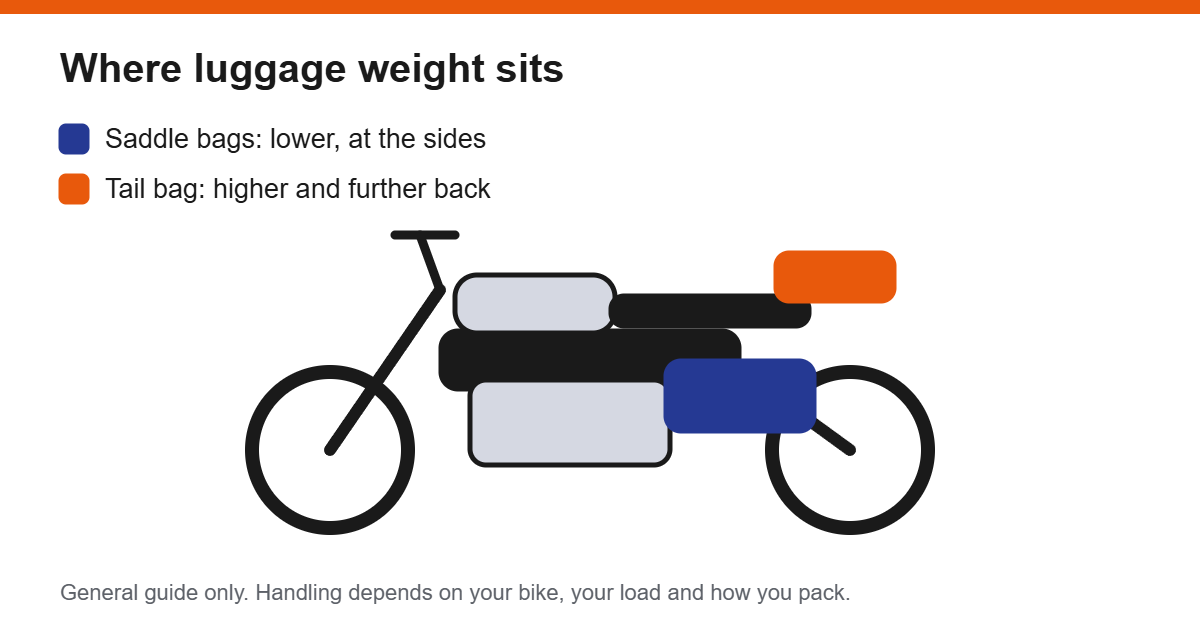
Both carry luggage, but they behave differently on the bike. The short answer: saddle bags sit lower and to the sides, which helps balance, while a tail bag is simpler and suits passengers or smaller loads. Many riders use both.
Who this guide is for
- Commuters and weekend riders carrying a bit of gear.
- Touring riders planning longer trips.
Side-by-side comparison
| Point | Saddle bags | Tail bag |
|---|---|---|
| Weight position | Low and to the sides | Higher and further back |
| Capacity | Sellers quote capacities varying widely by model | Varies widely, some expand |
| Mounting | Often needs bike-specific brackets | Often straps to the rear seat or a rack |
| Passenger | Usually compatible | Competes with the passenger seat |
| Handling | Wider bike, weight balanced if loaded evenly | Rear weight can change handling |
Seller guides quote different capacity ranges, and they do not always agree. Use the maker’s stated capacity for the exact product.
Weight limits: the part people skip
Capacity in litres is not the same as safe weight. Check the weight rating of the bag, the mounting system and your motorcycle’s manual, and stay within the lowest of them. Load both sides evenly.
A worked example. Kriega lists its US-10 Drypack tail bag at 10 litres, with the empty bag weighing 500 g. Those two numbers tell you the bag’s size and its own weight, not how much it is safe to load. For that you still need the load rating the bag maker gives for the bag and its mounts, and your motorcycle’s maximum payload from its manual. Harley-Davidson’s advice is to check the owner’s manual for payload and to remember that luggage and racks have their own stated limits.
What to consider
- Your bike type: not every bike suits every luggage system. Check bike-specific fitment.
- Passenger or solo: a tail bag can use the passenger’s seat space.
- Weather protection: check whether it is waterproof or needs a rain cover.
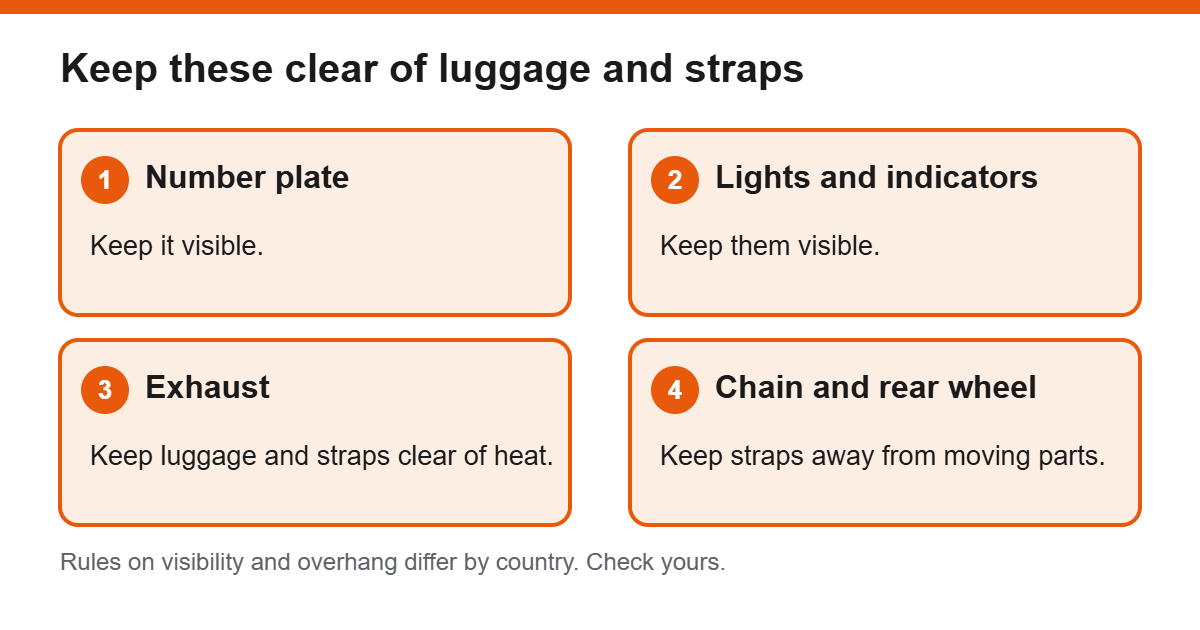
- Clearance: keep luggage away from exhausts, moving parts and lights.
- Security: consider removable bags and locks.
- Ease of use: think about getting things in and out when you stop.
Types of motorcycle luggage
| Type | Good for | Watch out for |
|---|---|---|
| Soft saddle bags | Lightweight capacity at the sides | Weather protection, keeping them clear of the exhaust and rear wheel |
| Hard panniers or cases | Security and weather protection | Cost, weight, bike-specific mounts |
| Tail bag or roll | A simple add-on for a solo rider | Uses passenger space, can affect handling |
| Top case or tail box | Lockable storage at the rear | Needs a mounting plate or rack, adds weight high and behind |
What suits your bike
Fitment varies, so check the maker’s bike-specific lists. As general pointers, touring and cruiser bikes often have mounting options for saddle bags or hard cases, sport bikes often use tail bags because of limited mounting points, and adventure bikes often suit panniers, though check your own model’s options.
How long is your trip?
| Trip | Worth considering |
|---|---|
| Daily commute | A small tail bag or compact luggage that is easy to remove |
| Day ride | A tail bag or a pair of small saddle bags |
| Weekend away | Saddle bags, or a tail bag plus a small second bag |
| Long tour | A combination of side and rear luggage, within your bike’s payload limit |
Packing tips
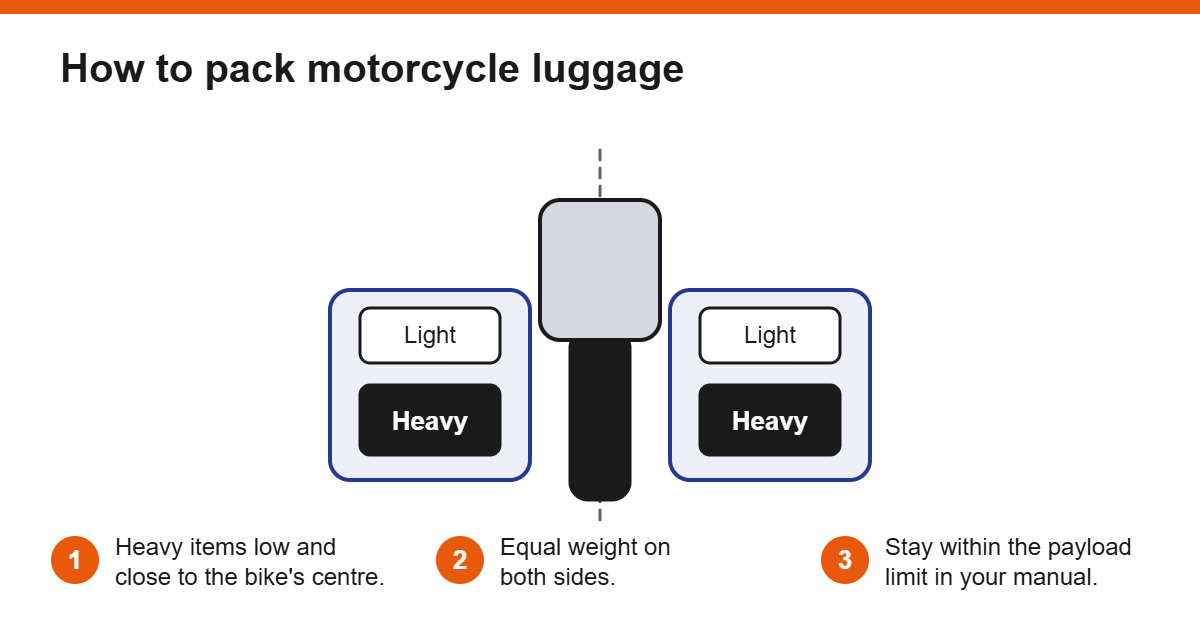
- Keep heavy items low and close to the centre of the bike, as Harley-Davidson’s luggage advice suggests.
- Spread weight evenly between both sides.
- Keep things you need at stops easy to reach.
- Protect electronics from rain with a liner or dry bag.
- Check your owner’s manual for your bike’s maximum load, and any advice on suspension and tyre pressures for a loaded bike.
- Take a short test ride with the bike loaded before a long trip.
Lights, plates and clearance
Luggage should not cover your number plate, lights or indicators. Keep bags and straps away from exhausts, the chain and wheels. We have not confirmed the details below against official legal texts, so treat them as things to check.
Number plates, racks and modifications in India
- Plate and lights. Insurance and industry sites say the registration plate must stay visible at the front and rear and that nothing on the bike should block it. Keep the plate, brake light and indicators uncovered, and check this with the bike fully loaded, not just empty.
- Racks and brackets. We found no official rule that addresses motorcycle luggage, saddle bags or luggage carriers by name. Section 52 of the Motor Vehicles Act, 1988 restricts altering a registered vehicle so that its registration details no longer match, except with the transport authority’s approval. We could not confirm whether a bolt-on rack or bag bracket counts as an alteration, so ask your local RTO if you are unsure.
- Crash guards and saddle stays. A Ministry of Road Transport and Highways letter dated 7 December 2017 asked states to act against unauthorised crash guards and bull bars on motor vehicles. News reports about it mostly discuss cars. We could not open the letter’s text or confirm how it applies to two-wheeler saddle stays, so ask your RTO or dealer before fitting a fixed guard.
- Monsoon. Luggage sitting low and close to the wheels gets splashed, so pick waterproof bags or use a rain cover, and keep straps clear of the chain and wheels.
Mistakes to avoid
- Overloading, or loading one side more than the other.
- Letting straps or bags touch the exhaust or wheel.
- Not re-checking fasteners during a trip.
- Ignoring the effect on handling when the bike is loaded.
Who should choose which
- Commuters with small loads may prefer a tail bag.
- Riders wanting low, balanced weight may prefer saddle bags.
- Long-distance riders often combine them.
Checklist before you buy
- Check fitment for your bike.
- Check weight ratings for bag, mount and bike.
- Decide whether you ride with a passenger.
- Check weather protection.
- Practise loading before a long trip.
Frequently asked questions
Can I use both?
Many sources suggest combining them to spread weight, within the limits above.
Will luggage change how my bike handles?
Yes, a loaded bike behaves differently. Ride carefully until you are used to it.
Do I need a rack for a tail bag?
It depends on the bag and your bike. Some strap to the seat, while others need a rack or mounting plate. Check the product’s mounting instructions.
Are hard panniers better than soft bags?
They offer more security and weather protection, but cost more and add weight. Soft bags are lighter and often cheaper. The right choice depends on your bike and trips.
Can I use a backpack instead?
Some riders do, but carrying weight on your shoulders can tire you on long rides. Luggage fixed to the bike is usually more comfortable for heavier loads.
Conclusion
Choose by your bike, your loads and passenger needs, and respect the weight limits. We will add clearly labelled recommendations later.
Related guides
- Browse more in Motorcycle Luggage & Storage.
Sources
- Harley-Davidson: How to carry luggage (page opened and checked).
- Kriega: US-10 Drypack (the manufacturer’s stated capacity and weight, used in the worked example).
- Luggage seller guides (for example Viaterra and Viking Bags) were used for general comparisons. They are commercial sources, so rely on the maker’s specifications for your product and bike.
- Motor Vehicles Act, 1988, Section 52 (alteration of motor vehicles): text as reproduced by Courtbook. This is a reference site, so check the official text on the India Code portal.
- Ministry of Road Transport and Highways: letter on unauthorised fitment of crash guards and bull bars, 7 December 2017 (we could not open the full text).