Researched buying guide. We have not tested the products or product types described here. Last reviewed: 15 November 2026.
Floor mats protect your carpets, but the driver’s mat is also a safety item, because a mat that slips can interfere with the pedals. The short answer: choose a mat that fits your car’s footwell, secure the driver’s mat with the retention clips, never stack mats, and check the pedals move freely after fitting.
Who this guide is for
- Owners protecting carpets from mud, water and dust, especially in the monsoon.
- Anyone choosing between rubber, carpet and tray-style mats.
- Drivers who want to fit new mats safely.
Safety first: the driver’s mat
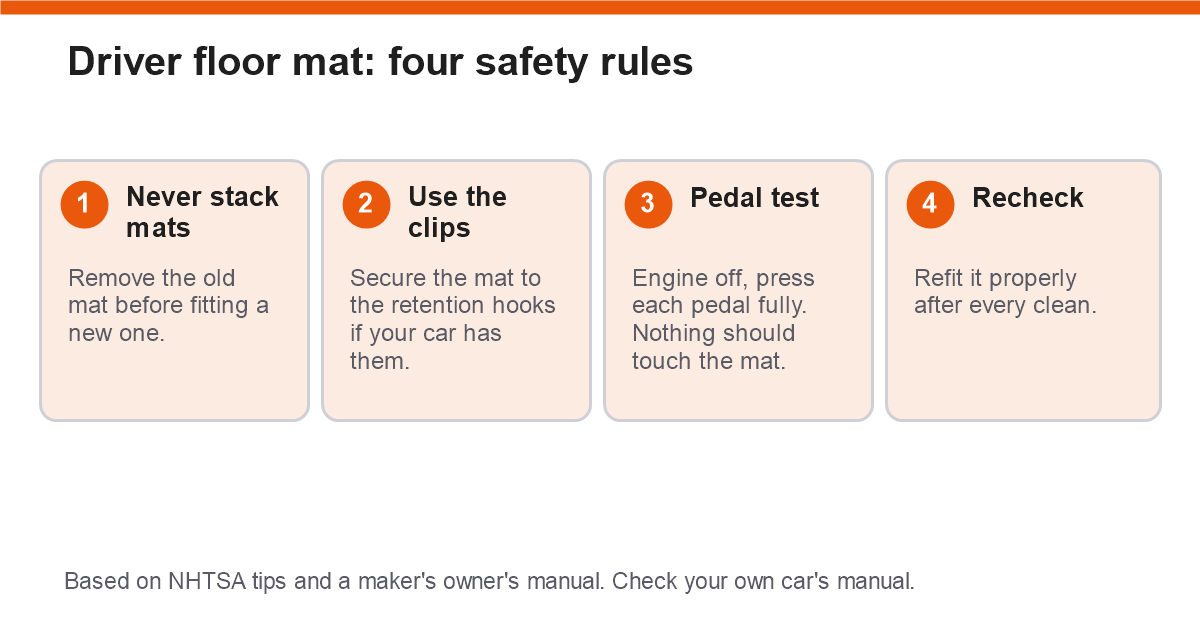
NHTSA tips relayed by a fleet-safety publication say never to stack mats, because that may increase the chance of pedal interference, to use the retention clips that hold the mat in position, and to check the driver’s mat is correctly refitted whenever mats are removed, for example for cleaning. A Lexus owner’s manual gives the same advice, and adds a simple test: with the engine off and the car in park, press each pedal fully to the floor to check nothing touches the mat.
- Never stack. Do not place a new mat over the old one. Remove the old mat first.
- Use the clips. If your car has retention hooks or pegs, the mat must be secured to them.
- Check after cleaning. Refit the driver’s mat properly every time, and check it is not folded or lifted.
- Pedal test. With the engine off, press and release each pedal fully. If a mat touches or catches, remove it.
- Fit for your car. A mat made for your model is more likely to sit correctly than a loose-fit universal one.
Types compared
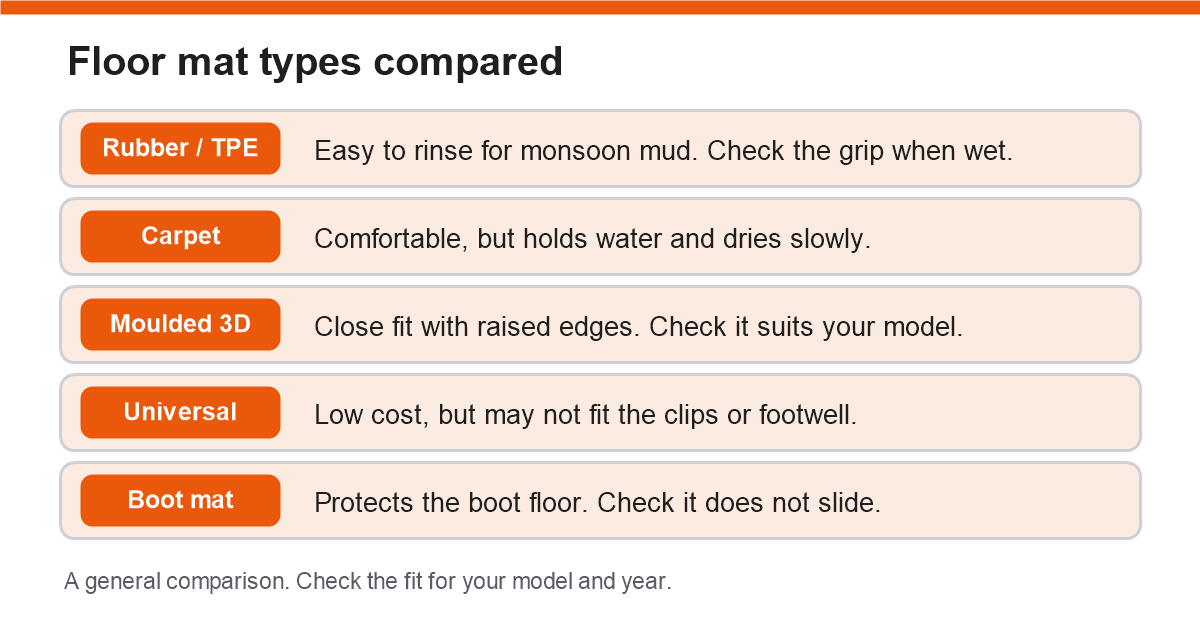
| Type | Good for | Watch out for |
|---|---|---|
| Rubber or TPE tray mats | Monsoon mud and water, easy to rinse | Can be slippery when wet. Check the grip and that it fits the footwell edges. |
| Carpet mats | Comfort and appearance | Soak up water and take longer to dry. Check the backing grips the floor. |
| Moulded 3D or custom-fit mats | Close fit and higher edges that hold spills | Cost more. Check they suit your model and year. |
| Universal mats | Low cost | May not fit the retention clips or the footwell shape. Trim only as the maker advises. |
| Boot mat | Protects the boot floor from luggage and wet items | Check it does not slide and leaves the spare wheel cover usable. |
What to check before you buy
- Fit. Check the maker lists your exact model and year, including whether it is left- or right-hand drive and which seating layout.
- Retention. Check it has holes or clips that match your car’s fixings, and that the driver’s mat can be locked in place.
- Grip. The underside should grip the carpet. A mat that slides is both annoying and unsafe.
- Edges. Raised edges hold water and mud, but must not touch the pedals.
- Smell. Some new rubber or plastic mats smell strongly. Check reviews and let them air before fitting.
- Heat. In strong sun, some materials can warp or smell. Check reviews for your climate.
Choosing for Indian conditions
- Monsoon. Rubber or TPE mats with raised edges keep water off the carpet, and they are easier to rinse and dry. Wet carpet under a fabric mat can lead to damp smells, so dry the floor when you can.
- Dust and mud. Choose a mat you can take out and shake or rinse easily.
- Hot weather. Check the material does not warp or become sticky in a hot parked car.
Fitting step by step
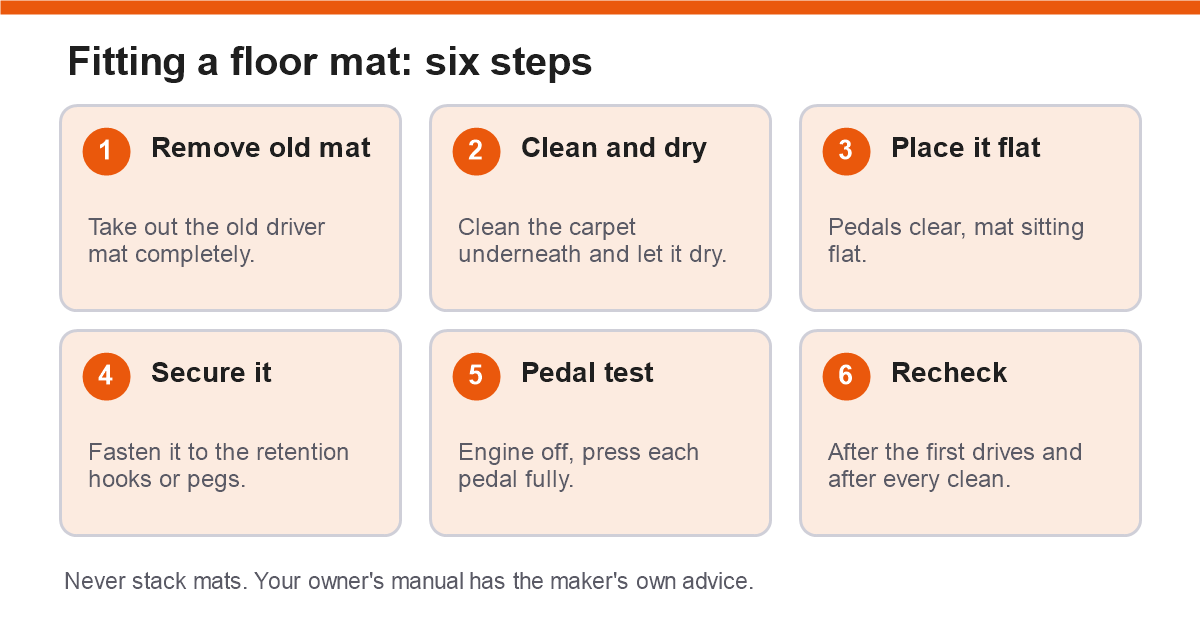
- Remove the old driver’s mat completely. Do not stack mats.
- Clean and dry the carpet underneath.
- Place the new mat so it sits flat, with the pedals clear.
- Secure it to the retention hooks or pegs if your car has them.
- With the engine off, press and release each pedal fully to check for interference.
- Recheck the mat after the first few drives, and after every cleaning.
Cleaning
- Shake out dust, then rinse rubber mats and let them dry fully before refitting.
- Vacuum carpet mats and dry them in shade. See our car vacuum guide.
- Avoid silicone or shiny dressings on the driver’s mat, which can make it slippery.
Mistakes to avoid
- Placing a new mat on top of an old one.
- Leaving the driver’s mat unclipped, or refitting it crooked after cleaning.
- Buying a mat that does not match your model.
- Trimming a mat without the maker’s guidance.
- Using a slippery dressing on the driver’s mat.
Who may not need new mats
If your existing mats fit well, grip the floor and clip in properly, you may only need to clean them. Replace them only if they are worn, curled or no longer held by the clips.
A quick checklist before you buy
- Confirm the mat is made for your model and year.
- Check it works with your car’s retention clips.
- Choose a material for your climate and use.
- Plan to remove the old mat, not stack.
- Plan to run the pedal test after fitting.
Frequently asked questions
Can I put a new mat over the old one?
No. Stacking mats may raise the chance of pedal interference. Remove the old mat first.
Are rubber mats better than carpet mats?
For monsoon and dirt, rubber or TPE is easier to keep clean. Carpet mats are more comfortable but hold water.
Are universal mats safe?
Only if they sit flat, grip the floor and can be secured. A mat that moves is unsafe at the driver’s seat.
How do I check there is no pedal interference?
With the engine off and the car in park, press each pedal fully and make sure nothing touches the mat. Check your owner’s manual for the maker’s own advice.
Conclusion
Choose a mat that fits your model, secure the driver’s mat, never stack mats, and check the pedals every time you refit them. When we add specific recommendations, they will be clearly labelled.
Related guides
- Car vacuum cleaners: what to look for
- Car seat covers: materials, fit and buying tips
- Browse more in Car Interior.
Sources
- Automotive Fleet: Fleet safety tip: driver floor mat installation, relaying NHTSA tips on stacking, retention clips and refitting.
- Lexus NX300 owner’s manual, floor mat warnings: on ManualsLib. It is an example of a maker’s advice. Your own car’s manual is the authority.
- We did not open the NHTSA page itself. Check nhtsa.gov and your owner’s manual for the exact guidance.