Researched buying guide. We have not tested the products or product types described here. Last reviewed: 15 November 2026.
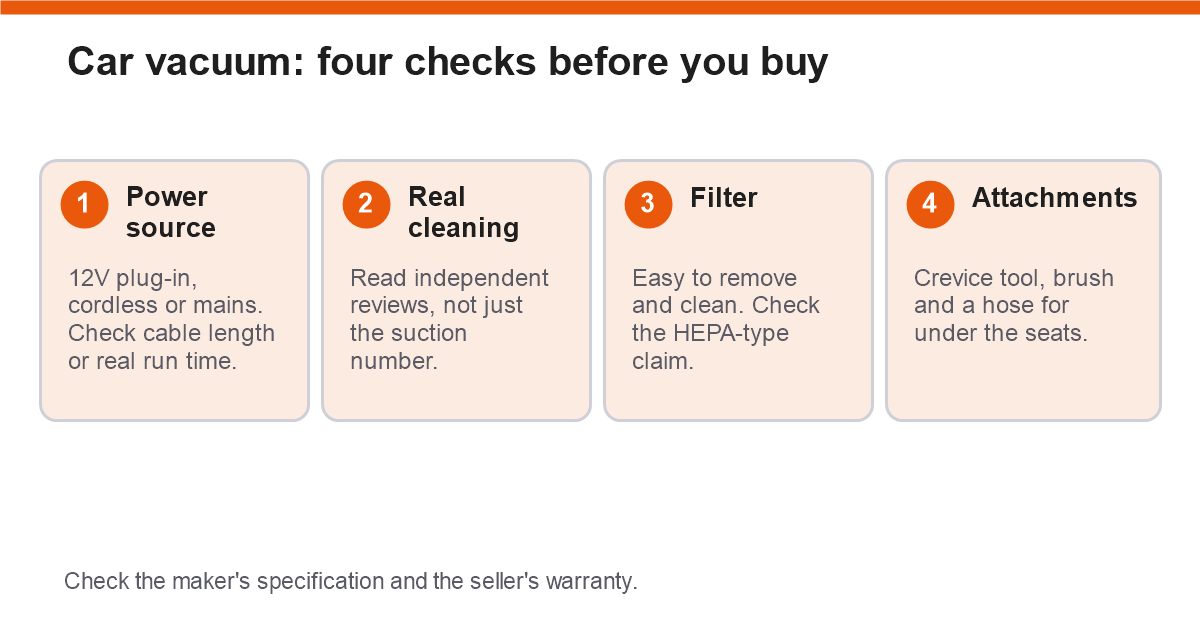
A car vacuum is only useful if it is strong enough for the job, easy to reach every corner with, and convenient enough that you actually use it. The short answer: decide between a plug-in unit that runs from the car’s 12V socket and a cordless one, ignore headline suction numbers in favour of independent reviews, and check the attachments and filter before you buy.
Who this guide is for
- Car owners who want to clean dust, sand and crumbs at home or on the road.
- Families with children or pets, and anyone who drives on dusty roads.
- Anyone confused by suction numbers such as “30,000 Pa” on a listing.
Main types
| Type | Good for | Watch out for |
|---|---|---|
| 12V plug-in (car socket) | Steady power with no battery to charge, kept in the boot | The cable must reach every corner, and your socket must supply the power it needs |
| Cordless handheld | Convenience and cleaning away from the car | Limited run time, and a battery that needs charging and care |
| Mains-powered unit | Cleaning at home with stronger sustained suction | Needs a socket and a long cable or extension |
| Wet and dry unit | Spills, mud and wet mats | Larger and heavier. Check the maker allows wet use. |
Suction: do not trust the big number
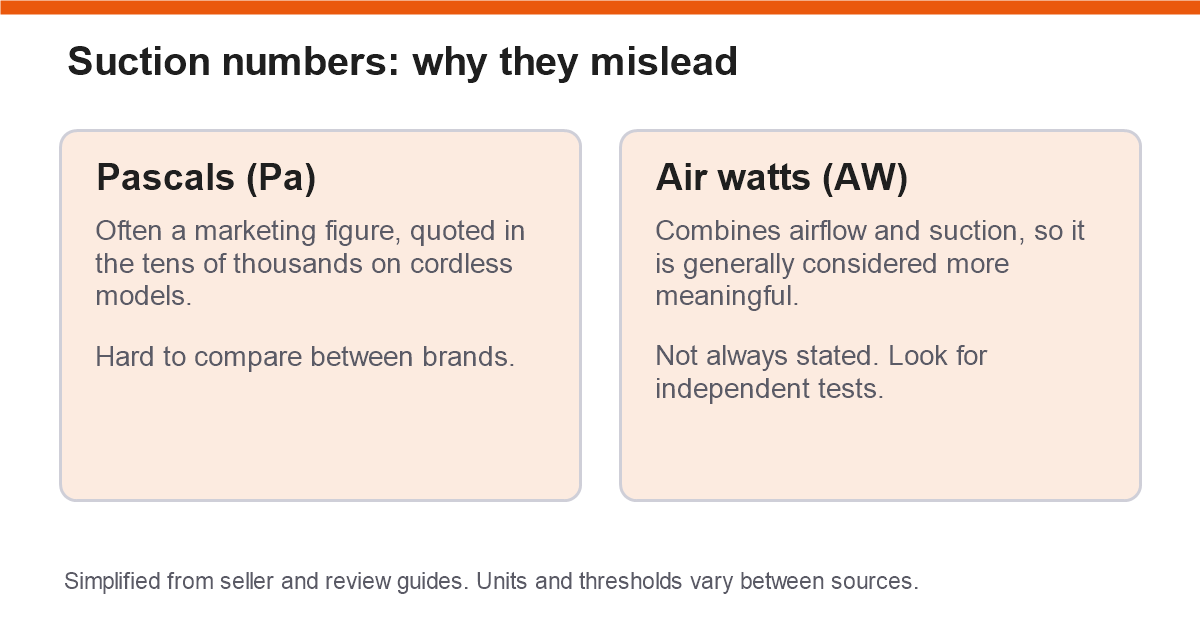
Sellers quote suction in pascals (Pa), and some cordless models advertise figures in the tens of thousands. Other guides use air watts, which combine airflow and suction and are generally considered more meaningful. The sources we read disagree on units and on what counts as strong, and Pa figures are largely marketing numbers that cannot be compared between brands. Use them only to compare two models from the same maker, and weigh independent reviews and real-world cleaning tests more heavily.
Power and run time
- 12V plug-in. Check the cable length reaches the whole car, including the boot. Check your car’s manual for the socket’s rating, because sockets are protected by fuses and not every socket suits every unit. Run the vacuum with the engine on, so you do not drain the battery.
- Cordless. Listings for mainstream models quote roughly half an hour of run time, but that is usually at low power. Check how long it runs at the setting you will actually use, and whether the battery can be replaced.
Filters
- A HEPA-type filter traps fine dust and allergens inside the unit, which matters if anyone in the family has allergies. Check the maker’s claim and whether the filter is washable or replaceable.
- A clogged filter cuts suction, so choose one that is easy to remove and clean.
- A larger dust bin means fewer trips to empty it.
Attachments that matter
- A crevice tool for seat gaps and door pockets.
- A brush tool for fabric and for loosening dust from the dashboard and vents.
- A flexible hose or extension to reach under seats.
- A built-in light, which helps in dark footwells.
Noise
We did not find reliable noise figures in the sources we read, so we cannot give a general number. Check the maker’s decibel rating if it is stated, and read independent reviews. A very loud unit is tiring to use and can upset pets and children.
Cleaning in Indian conditions
- Dust and sand. Dusty roads fill carpets and vents quickly. A brush tool and a good filter matter more than raw suction.
- Monsoon. Wet mats and seats need drying, not just vacuuming. Do not use a dry-only vacuum on anything wet, and do not use a vacuum that is not rated for wet use on liquid.
- Heat. Do not leave a cordless unit or its battery in a hot parked car. Follow the maker’s storage advice.
A simple cleaning order
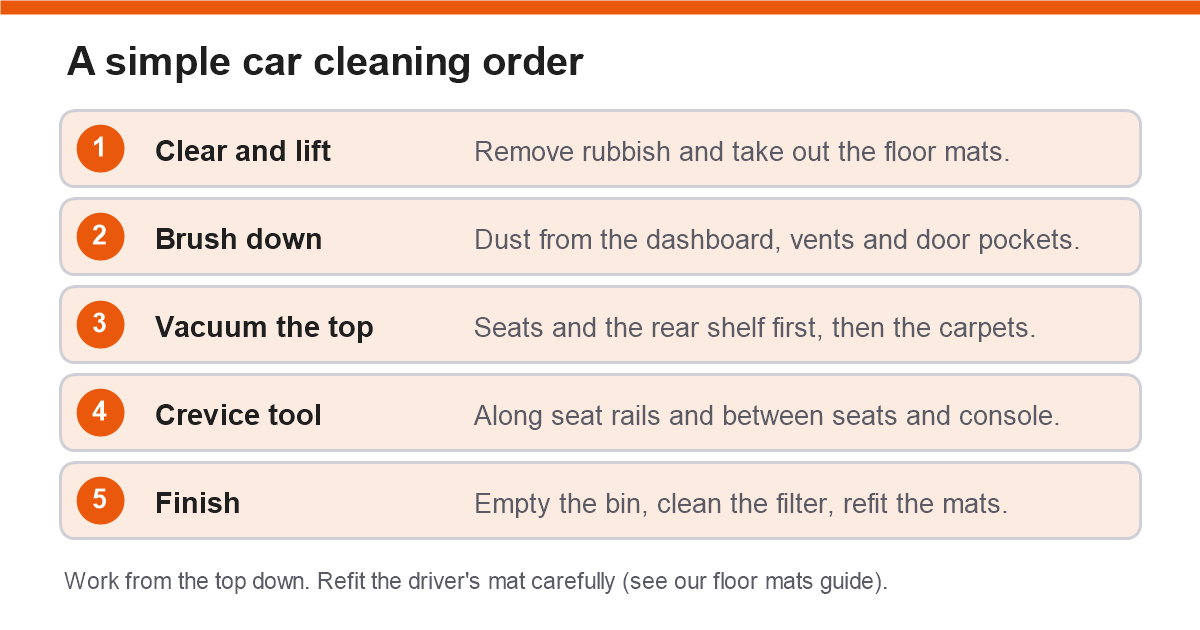
- Remove loose rubbish and take out the floor mats. See our floor mats guide for how to refit them safely.
- Brush dust from the dashboard, vents and door pockets so it falls to the floor.
- Vacuum seats and the rear shelf, then carpets, working from the top down.
- Use the crevice tool along seat rails and between the seats and the console.
- Empty the bin and clean or tap the filter, then refit the mats.
Mistakes to avoid
- Buying on a headline suction number alone.
- Choosing a 12V unit with a cable too short to reach the boot.
- Running a vacuum from the socket with the engine off for a long time.
- Ignoring the filter until suction drops.
- Using a dry vacuum on wet carpets.
Who may not need one
If you already have a good household vacuum with a hose and crevice tool, and a long extension cable, you may not need a separate car unit. A stiff brush and a mat shake-out can handle light cleaning.
A quick checklist before you buy
- Decide between a 12V plug-in, a cordless and a mains unit.
- Check the cable length or the real run time.
- Read independent reviews, not just suction figures.
- Check the filter type and how easy it is to clean.
- Check the attachments you will use.
- Check the warranty and seller support.
Frequently asked questions
Is more suction always better?
Not necessarily. Airflow, the nozzle, the filter and the attachments all affect cleaning. A high Pa figure on its own tells you little.
Can a 12V vacuum drain my battery?
It can if you run it for long with the engine off. Run it with the engine on, or keep use short.
Can I vacuum wet spills?
Only with a wet and dry unit that the maker says is suitable. Otherwise, blot the spill first and let it dry.
How often should I clean the filter?
Whenever suction drops, and as the maker advises. Dusty roads mean more often.
Conclusion
Choose the power source that suits where you clean, favour a good filter and useful attachments over a big suction number, and check independent reviews. When we add specific recommendations, they will be clearly labelled.
Related guides
- Car floor mats: types and buying guide
- Car seat covers: materials, fit and buying tips
- Browse more in Car Travel & Utility.
Sources
- Seller and review guides were used for general terms such as suction units, filters and attachments, for example Fanttik and Detail Xperts. Their figures differ and many are marketing numbers, so rely on independent reviews and the maker’s specification.
- Your car’s owner’s manual is the authority on the 12V socket rating.