Researched guide. We have not tested the products or product types described here. Last reviewed: 16 November 2026.
The most useful safety items in a car are often the simplest: seat belts that everyone wears, tyres in good condition, a first-aid kit and a way to be seen if you break down. The short answer: sort the basics and the legal requirements first, then add accessories that fix a real problem, such as a dash camera or a puncture kit.
Who this guide is for
- Car owners who want to know what to carry and what to fit.
- Families with children and older passengers.
- Anyone tempted by safety gadgets and unsure which ones matter.
Start with what is already in the car
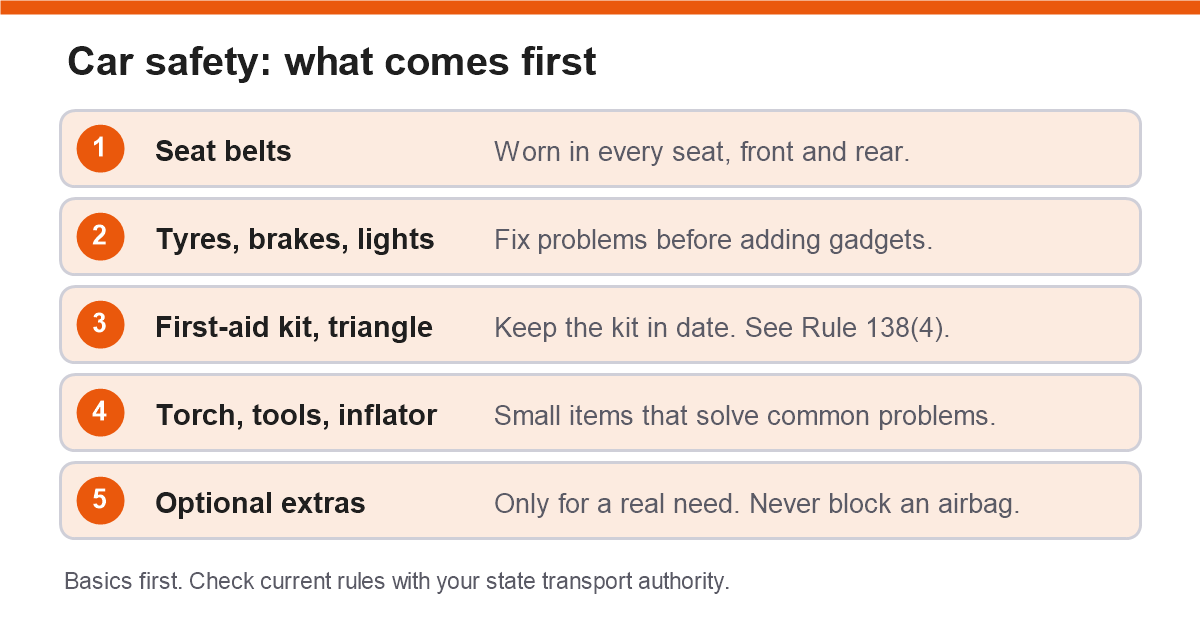
- Seat belts. News reports say rear-seat passengers are required to wear belts and that a fine of one thousand rupees is reported, with enforcement patchy and varying by city. The reports point to Rule 138(3) of the Central Motor Vehicles Rules, but we could not open the rule text. Wear belts in every seat, and check current rules in your state.
- Tyres. Check pressure, tread and the spare. See our tyre inflator guide.
- Brakes, lights and wipers. Fix problems before you add gadgets.
- Airbags. Do not cover or block them. Seat covers and organisers can interfere. See our guides to seat covers and organisers.
Children in the car
Children need restraints that suit their age and size. We found reports about child-restraint rules and fines in India, but the sources were thin and we could not confirm the current requirements. Use a child seat that suits your child’s size and fits your car, follow the seat maker’s and your car’s manual, and check the current rules with your state transport authority.
What to carry in the car
| Item | Why it matters |
|---|---|
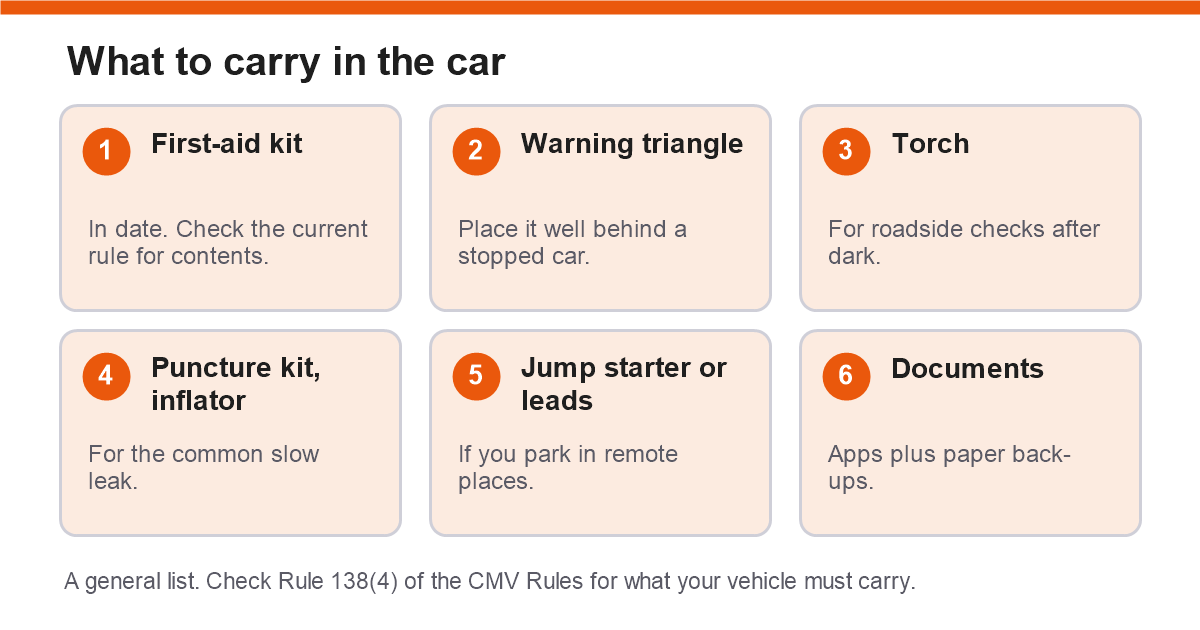
| First-aid kit | Rule 138(4) of the Central Motor Vehicles Rules lists a first-aid kit among the items to be carried in a vehicle. The contents were revised by a 2020 amendment, and we could not retrieve the exact list, so read the current rule and check your kit. |
| Warning triangle | The same rule refers to a warning triangle. We could not confirm whether it applies to your vehicle type. Place it well behind the car if you stop on the road. |
| Torch and basic tools | For roadside checks after dark. |
| Puncture repair kit and inflator | A slow leak is a common problem. |
| Jump starter or jump leads | See our jump starter guide. |
| Documents | See our road trip checklist for what to carry and in what form. |
Optional accessories worth considering
| Accessory | What it does, and what to watch |
|---|---|
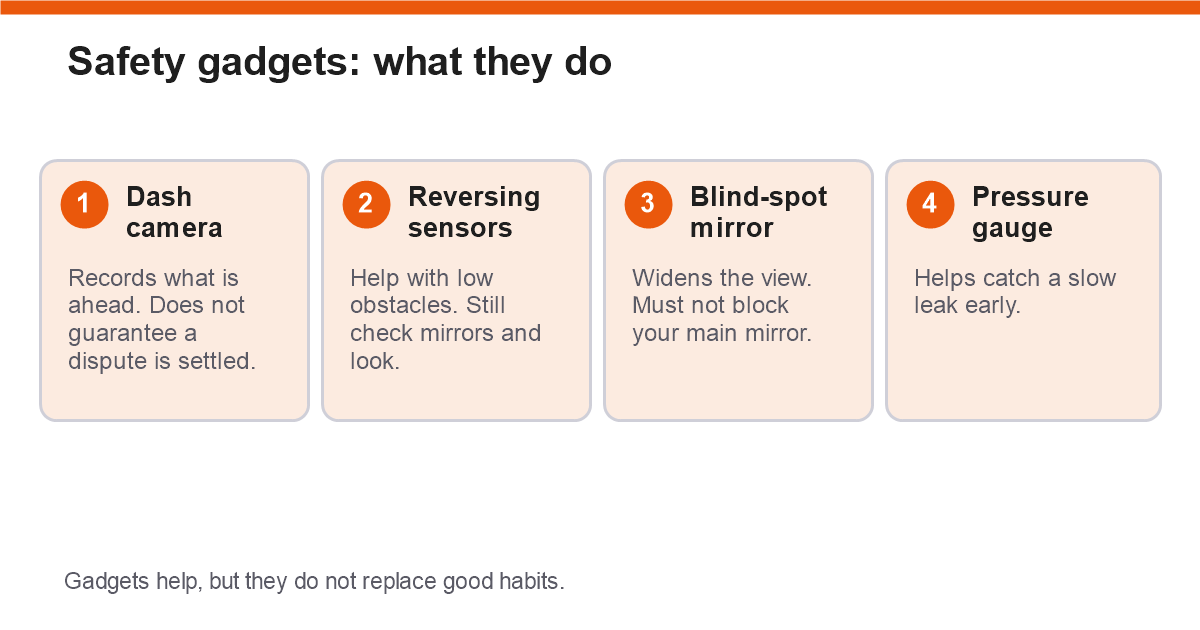
| Dash camera | Records what is ahead. See our dash cam guide for the Indian points on evidence and privacy. |
| Reversing sensors or camera | Help with low obstacles and tight parking. They do not replace checking mirrors and looking around. |
| Blind-spot mirrors | Small convex stick-on mirrors can widen your view. Fit them so they do not block your main mirror view. |
| Tyre pressure gauge or monitor | Makes it easier to catch a slow leak. A simple gauge is enough. |
| Phone holder | Keeps your hands off the phone. See our phone holder guide for the Indian rules. |
Things that look like safety but are not
- Stick-on gadgets with no stated specification or certification.
- Accessories that cover airbags, block your view or add loose objects to the cabin.
- Unapproved lights, horns or other modifications. Check the rules before fitting them.
Mistakes to avoid
- Buying gadgets before checking tyres, brakes and seat belts.
- Letting passengers travel without belts.
- Blocking an airbag with an accessory.
- Leaving an expired first-aid kit in the car.
Who may not need extras
If your car is well maintained, you wear belts in every seat and you carry the basics, you may not need much more. Add accessories only when they solve a problem you have had.
A quick checklist
- Seat belts working and worn in every seat.
- Tyres, spare, brakes and lights checked.
- First-aid kit in date, and a warning triangle if applicable.
- Torch, basic tools, inflator and puncture kit.
- Child seat suited to your child’s size, if needed.
- Optional extras chosen for a real need.
Frequently asked questions
Do rear passengers have to wear seat belts?
Reports say yes, with a fine of about one thousand rupees reported, but enforcement varies. Check current rules in your state, and wear belts anyway.
Do I need a fire extinguisher?
We did not find a source confirming that a private car must carry one. Some owners carry a small one. If you do, check it is suited to vehicle use and in date.
Is a dash cam a safety item?
It does not prevent accidents, but it can help show what happened. See our dash cam guide for the limits.
Are blind-spot mirrors worth it?
They can help, but they do not replace looking around and adjusting your mirrors properly.
Conclusion
Get the basics right, carry the essentials, and add gadgets only for a real need. When we add specific recommendations, they will be clearly labelled.
Related guides
- Essential car accessories for long road trips in India
- Portable tyre inflators: complete buying guide
- Browse more in Car Safety & Security.
Sources
- Central Motor Vehicles Rules, 1989, Rule 138(3) (seat belts) and Rule 138(4) (items to be carried, including a first-aid kit). We could not open the current consolidated text, so read it on the Ministry of Road Transport and Highways site or India Code.
- News and insurance-site reports on rear seat belts and fines, for example The Quint. These are secondary sources, so check current rules.
- Your car’s owner’s manual is the authority on airbags, child restraints and the spare wheel.