Researched buying guide. We have not tested the products or product types described here. Last reviewed: 22 November 2026. This is not legal advice.
Extra lights, such as fog lamps and LED pods, are one of the most popular motorcycle add-ons in India and also one of the most confusing legally. The short answer: the rules are not clear-cut from the sources we found, enforcement varies by state, and bright or badly aimed lights can dazzle other road users. Read the legal section before you buy, and confirm with your local RTO.
Who this guide is for
- Riders who travel at night, on highways or in fog and want better visibility.
- Riders comparing fog lamps and LED auxiliary pods.
- Anyone who wants to avoid a challan, a rejected inspection or an insurance problem.
What the rules say, and what we could not confirm
We read the sources below and found these points. Several sources are commercial blogs, so treat them as pointers rather than authority.
- Fog lamps are covered by an Indian lighting standard. The Automotive Industry Standard AIS-008 sets installation requirements for lighting. Sources say front fog lamps may be white or amber, should sit below the main headlamp, and should be used only in poor visibility. One motorcycle guide says one or two front fog lamps are allowed, but the AIS-008 text we saw lists a different number in different places. We could not settle the figure, so check the current official standard.
- There is no clear permission for any number of extra LED pods. Sources say the fog lamp clause is a fog lamp provision, not a general allowance for extra driving lamps or spotlights.
- Approval matters. Sources say aftermarket lamps should carry type approval from a recognised testing agency such as ARAI, and that the relevant standard for motorcycle lamps differs from the one for cars. Check the exact standard with the seller and ask to see the certificate.
- Alterations and Section 52. Several sources say Section 52 of the Motor Vehicles Act restricts changes that alter what the registration certificate records, unless the RTO allows it. We could not find a clear official route for registering extra lights, and the sources do not separate Section 52 from the lighting rules cleanly.
- Enforcement varies. Reports describe challans and drives against aftermarket lights in some states, and the Kerala High Court has addressed unauthorised lighting alterations. Fine amounts in blogs differ, so we do not quote any.
- Sale is not the same as road use. One report says selling such lamps is not banned but using them on public roads is the problem. We could not verify this from an official source.
Because of these gaps, we cannot tell you that any particular setup is legal in your state. Ask your local RTO or traffic police before fitting extra lamps, and keep the paperwork for any approved lamp.
Main types
| Type | Good for | Watch out for |
|---|---|---|
| Fog lamp (certified) | Low, wide light in fog, rain and dust | Position, colour and wiring. Use only when visibility is poor. |
| LED auxiliary pod or spot | Extra reach on dark roads | Glare for oncoming traffic, unclear legal status, and heat |
| Brighter replacement headlamp bulb | Better light without extra lamps | Glare if the housing is not made for it. Check approval. |
Light quality matters more than brightness
- A bigger lumen number does not mean safer. A lamp with a poor beam pattern scatters light and dazzles others.
- Check the beam pattern and whether there is a cut-off, so light stays low and does not hit oncoming eyes.
- Sources say front fog lamps may be white or amber. We did not find independent evidence on which colour works best, so choose by beam pattern, not colour claims.
- Aim the lamps correctly after fitting, and keep them aimed as the bike carries luggage or a pillion.
Electrical safety
- Extra lamps draw power from the battery. Check the total wattage against what your bike’s charging system can supply. Your owner’s manual has details.
- Use a relay and a fuse, and wire through a switch. Poor wiring is a fire risk.
- Fitting is a job for a qualified mechanic if you are not experienced. Incorrect wiring can also affect your warranty. Check with your dealer.
Mounting and build
- Mount the lamps firmly and low enough that they sit below the main headlamp. Crash guards and handlebar mounts both work, but check they do not block the horn, mirrors or fork movement.
- Look for water and dust protection. An IP rating, if stated, tells you how well the lamp is sealed. Verify the claim with the maker.
- A switch you can reach while riding helps you turn them off for oncoming traffic.
Indian conditions
- Fog on highways. This is where low, wide fog lamps help the most.
- Monsoon. Seals and connectors matter, because water gets into poorly sealed lamps.
- Unlit roads and wildlife. Better lights help, but slowing down helps more.
- Checkpoints. Rules and enforcement vary by state. Check before a long trip across states.
Mistakes to avoid
- Buying lights on brightness claims alone.
- Fitting extra lamps without checking local rules.
- Using auxiliary lamps in city traffic or against oncoming vehicles.
- Wiring lamps directly to the battery without a fuse and relay.
- Choosing lights with flashing, strobe or multi-colour modes. The Kerala High Court direction reported by LiveLaw named such lights among unauthorised alterations.
Who may not need extra lights
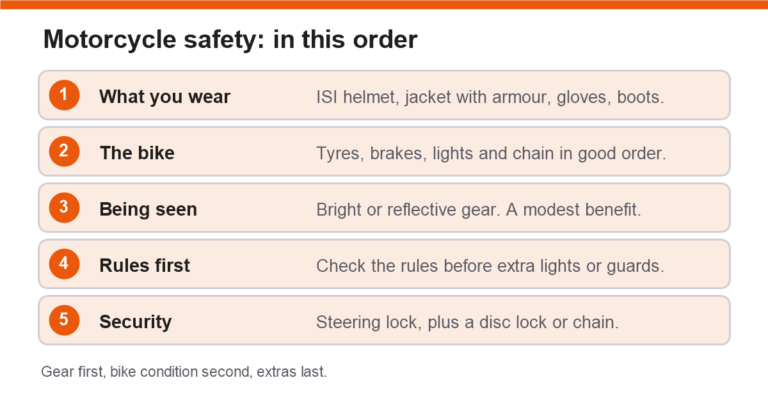
If you mostly ride in well-lit cities in daylight, extra lamps add risk and legal trouble for little benefit. A good headlamp bulb in the right housing, clean lenses and reflective gear can improve visibility without extra lamps. See our motorcycle safety accessories guide.
A quick checklist before you buy
- Ask your RTO or traffic police what is allowed in your state.
- Ask for the type approval certificate and check the standard.
- Check the beam pattern and light colour.
- Check the wattage against your bike’s electrical capacity.
- Plan a fused, relayed and switched installation.
- Check the warranty, and tell your insurer if you modify the bike.
Frequently asked questions
Are auxiliary lights legal in India?
The sources we found do not give a clear yes or no. Certified fog lamps are covered by a lighting standard, but extra LED pods are less clear, and enforcement varies. Check locally.
How many lamps can I fit?
Sources disagree, and we could not confirm the number. One or two front fog lamps is the figure most often mentioned. Check the current standard and your RTO.
Can I use them all the time?
Sources say fog lamps are for poor visibility only. Use them sparingly and never against oncoming traffic.
Will fitting lights affect my insurance?
We could not find a clear answer. Ask your insurer before you modify the bike.
Conclusion
Extra lights can help, but the legal position is uncertain, and poorly chosen lamps can make roads less safe. Check the rules locally, prefer certified fog lamps with a controlled beam, and wire them safely. When we add specific recommendations, they will be clearly labelled.
Related guides
- Essential motorcycle safety accessories
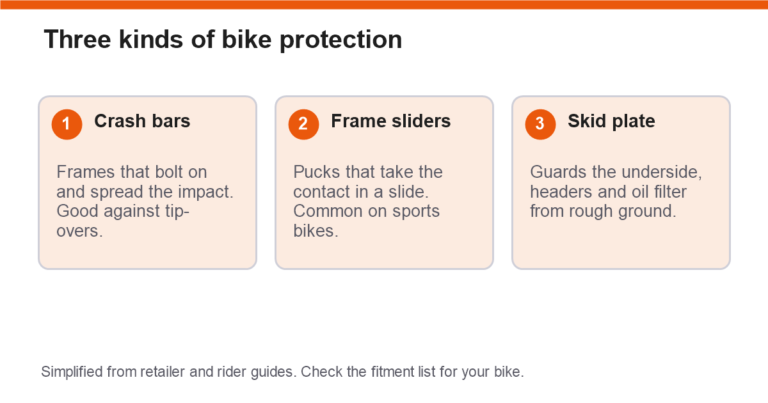
- Crash guards, sliders and skid plates explained
- Motorcycle USB chargers: how to choose
Sources
- Lighting installation standard: AIS-008 (Rev. 2). Read it directly for the current requirements.
- Explainers and guides, which are secondary and partly commercial: Roadle, Bike League, Acko.
- News and legal reporting on enforcement, for example LiveLaw on a Kerala High Court direction. We did not verify the order itself.