Researched guide. We have not tested the products or product types described here. Last reviewed: 16 November 2026.
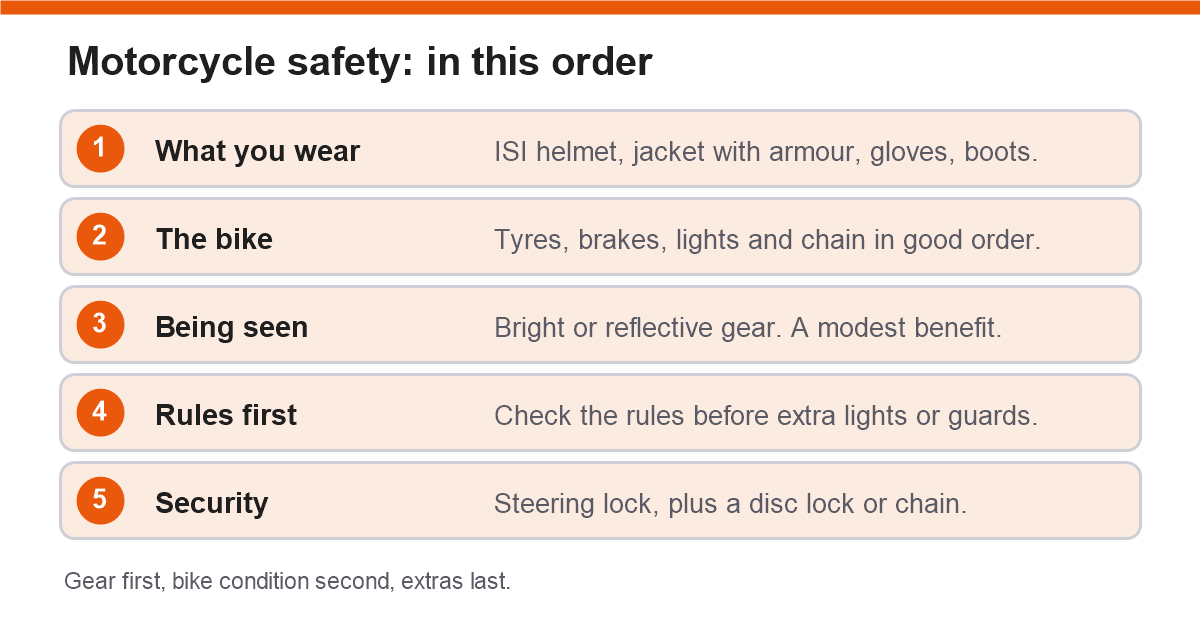
The most important motorcycle safety gear is the gear you wear, and the next most important is a bike that is in good condition. The short answer: get an ISI helmet, a jacket and gloves, keep tyres, brakes and lights in order, and only then consider extras such as extra lights, reflective gear or crash protection, checking the rules before you fit anything.
Who this guide is for
- Riders who want a clear order of priorities for safety spending.
- Riders tempted by lights, guards and gadgets and unsure which are worth it.
- New riders building up a kit.
Priority 1: what you wear
| Item | Why |
|---|---|
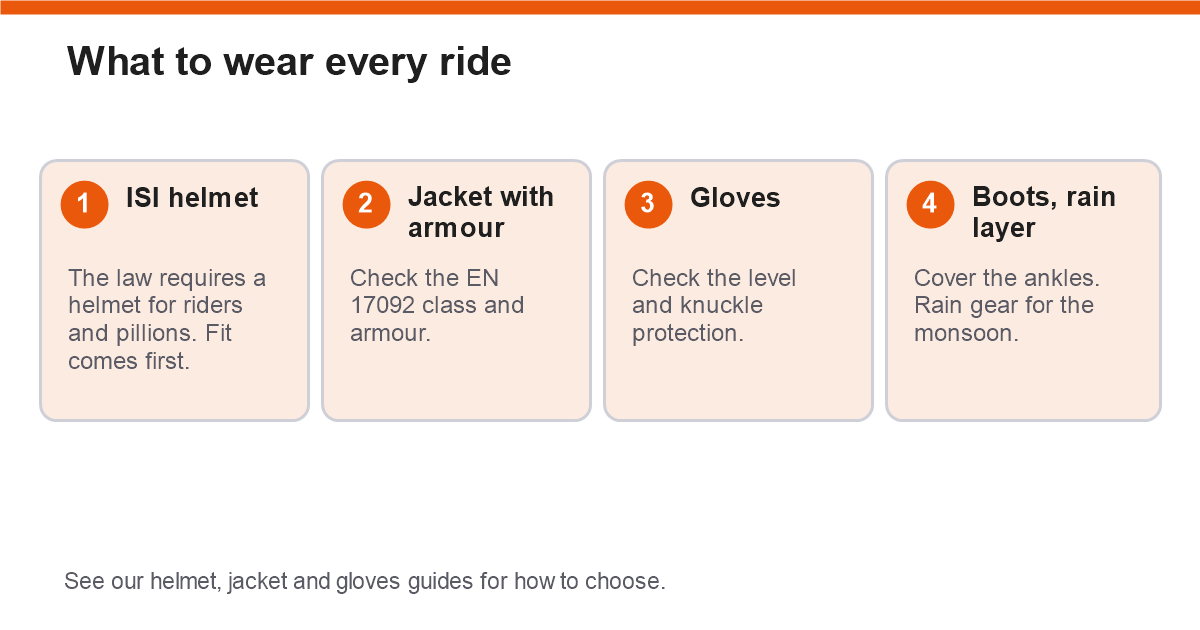
| Helmet with the ISI mark | The law requires a protective helmet for riders and pillion passengers, and IS 4151:2015 is the standard. See our helmet guide. |
| Jacket with armour | Protects against abrasion and impact. See our jacket guide. |
| Gloves | Hands take a lot of force in a fall. See our gloves guide. |
| Boots or sturdy shoes | Ankles and feet need cover. Sandals and slippers offer none. |
| Rain layer | Visibility and grip suffer in heavy rain. A rain suit helps keep you dry and alert. |
Priority 2: the bike itself
- Tyres. Check pressure, tread and cuts, using your manual’s figures for load and passenger.
- Brakes. Check pads, fluid and feel. Do not ride with a known brake fault.
- Lights and indicators. Check they all work, and that your number plate is visible.
- Chain and controls. Keep the chain adjusted and lubricated, and check cables and levers.
Priority 3: being seen
Reports describe a modest benefit from high-visibility clothing. A US government focus-group report notes that high-visibility gear is more visible to the human eye, and that one study found riders in fluorescent gear reported fewer crashes or near-misses, though that is self-reported and observational. A cycling review concludes that conspicuity aids likely help but that the effect seems relatively weak. In short, being seen helps a little, and does not replace good riding.
- Choose a jacket or helmet in a bright colour, or add reflective strips for riding at dusk and at night.
- Keep your lights clean, and use your headlight as the law and your bike require.
- Do not assume other road users have seen you. Position yourself so they can.
Extra lights: check the rules first
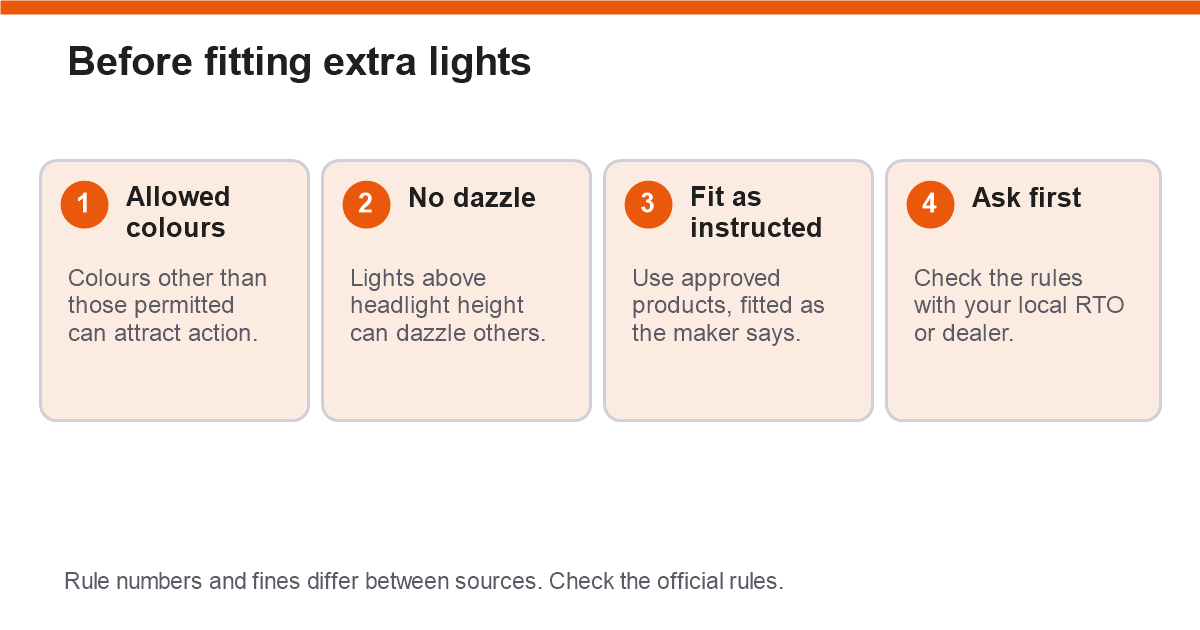
Extra fog or auxiliary lights are popular, but rules apply. Sources we read say fog lamps are generally allowed only if they meet colour, intensity and fitting rules and are used only in poor visibility, and that lights which dazzle other road users, such as multi-coloured fog lamps or lights mounted above headlight height, can lead to action. We saw a Supreme Court matter that lists such lights as dazzle risks, but we could not read the ruling. The rule numbers and fines quoted in blogs conflict, so check the Central Motor Vehicles Rules and ask your local RTO before you fit extra lights.
- Do not fit lights that dazzle other riders and drivers.
- Avoid colours other than those permitted.
- Use approved products, and fit them as the maker instructs.
Crash protection
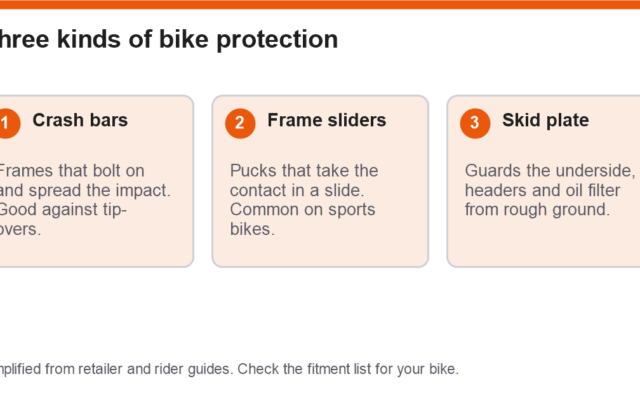
Crash bars, sliders and skid plates protect the bike, and sometimes the rider’s legs from being trapped, but they are not a replacement for riding gear. See our guide to crash guards, sliders and skid plates for the differences and the points to check in India.
Security
- Use the steering lock every time, and park in a well-lit, busy place where you can.
- A disc lock or chain adds a visible deterrent. A cover hides the bike but does not secure it.
- We did not find reliable sources on trackers and anti-theft products for this guide, so check independent reviews and the seller’s warranty before buying.
Useful small items
- A tyre pressure gauge, so you can check cold pressure at home.
- A puncture repair kit and a pump for long rides. See our tool kit guide.
- A small first-aid kit and a torch.
- A phone mount, so you never hold the phone. See our phone mount guide.
Mistakes to avoid
- Spending on accessories before buying a proper helmet, jacket and gloves.
- Fitting lights that dazzle other road users.
- Riding with worn tyres or weak brakes.
- Using the phone while riding. Section 184 of the Motor Vehicles Act treats handheld phone use while driving as dangerous driving.
- Relying on a crash guard in place of riding gear.
Who may not need extras
If you have a good helmet, jacket and gloves and a well-maintained bike, most extras add little. Add them only to solve a problem you actually have.
A quick checklist
- ISI helmet, jacket with armour, gloves and proper footwear.
- Tyres, brakes, lights and chain checked.
- Reflective or bright gear for dusk and night riding.
- Rules checked before fitting extra lights or guards.
- A way to secure the bike.
- Phone in a mount, with navigation set before you ride.
Frequently asked questions
What should I buy first?
A properly fitting ISI helmet, then a jacket with armour and gloves.
Do extra lights make me safer?
Only if they are legal and do not dazzle others. They are not a substitute for good riding and good gear.
Is high-visibility gear worth it?
Evidence suggests a modest benefit. It is cheap and easy, especially at dusk.
Do crash guards protect me?
They mainly protect the bike. Rider protection comes from riding gear.
Conclusion
Gear first, bike condition second, extras last, and always check the rules before you modify the bike. When we add specific recommendations, they will be clearly labelled.
Related guides
- How to choose the right motorcycle helmet
- Motorcycle covers: how to choose the right one
- Browse more in Motorcycle Protection.
Sources
- US Department of Transportation (NHTSA) report on motorcycle conspicuity and high-visibility gear: rosap.ntl.bts.gov (focus-group findings, self-reported).
- Motor Vehicles Act, 1988, Sections 129 and 184, as quoted in the Bombay High Court judgment Project Revolt LLP v. Bureau of Indian Standards and by Courtbook. Check the official text on India Code.
- Reports on fog and auxiliary lights on motorcycles, for example Ride N Repair and QuickInsure. These are blogs, and their rule numbers and fines conflict, so check the official rules.