Researched buying guide. We have not tested the products or product types described here. Last reviewed: 15 November 2026.
A cover protects your bike from sun, dust and rain, but the wrong one can trap moisture and do more harm than good. The short answer: choose a cover sized to your bike’s real measurements, with breathable fabric or vents, put it on a clean, dry and cool bike, and secure it against wind.
Who this guide is for
- Riders who park outdoors, in a society or on the street, or in a shared garage.
- Owners worried about monsoon rain, strong sun and dust.
- Anyone unsure whether to choose waterproof, breathable or both.
Indoor or outdoor?
| Where you park | Worth considering |
|---|---|
| Indoors or under a roof | A light, breathable cover mainly for dust and scratches. |
| Outdoors in sun and rain | A heavier cover with weather protection and ventilation, secured against wind. |
| Long-term storage | A breathable cover, on a clean and dry bike. Check it regularly for damp. |
| Short stops | A light cover or none at all. A cover is not a substitute for a lock. |
Fit and sizing
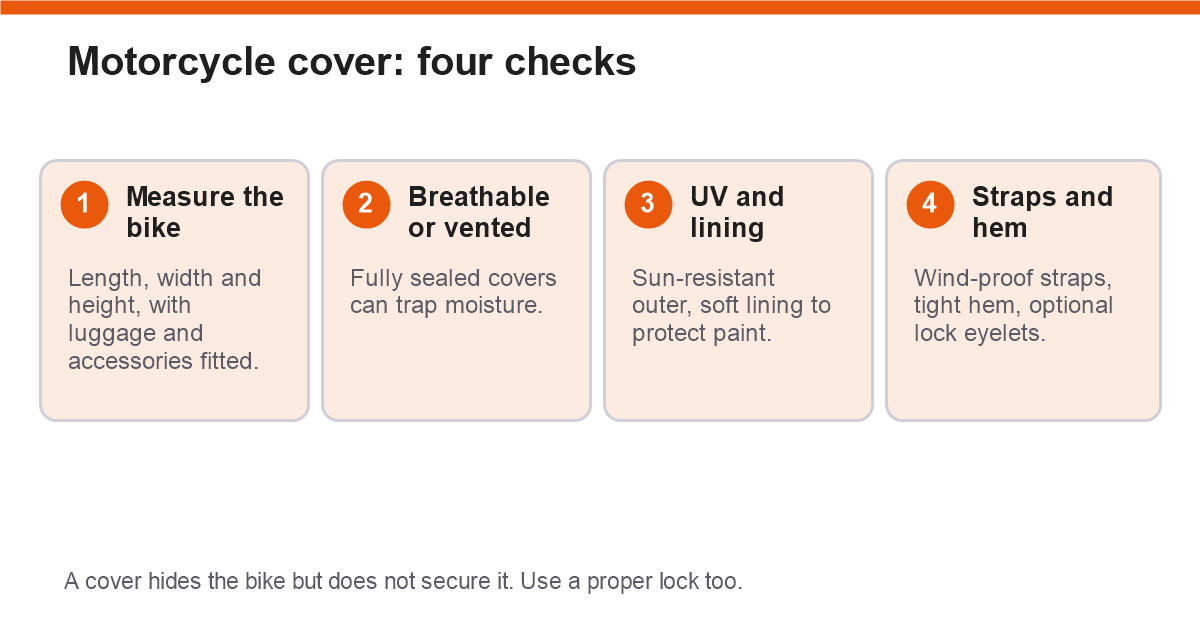
- Measure your bike’s length, width and height rather than relying only on generic S, M and L labels. Sources we read stress this point.
- Account for add-ons. A top box, tall screen, crash guards or luggage rack make the bike larger, so you may need a bigger size.
- A cover that is too small leaves parts exposed, and one that is much too large flaps in the wind and can scuff the paint.
- Check there is a way to tighten the hem, for example elastic or a drawcord.
Waterproof, but breathable
A fully sealed, non-breathable cover can trap moisture underneath, according to cover guides, and damp air against metal can speed up corrosion on the chain, fasteners and frame. Look for breathable fabric or vents that let moisture escape while keeping rain out. If you must use a plain waterproof sheet, check under it regularly and do not leave it on for long periods in damp weather.
Material and sun
- Strong sun can fade and weaken cheap fabric, so check the stated UV resistance in the specification.
- Look for a soft inner lining that will not scratch paint or the screen.
- Check seams and stitching, since they fail first in wind and rain.
- Check whether the cover is rated for heat. Fabric near the exhaust must not melt. See the section on hot exhausts below.
Security and wind
- Look for a strap under the bike, or buckles, so wind does not lift the cover.
- Some covers have reinforced eyelets that you can lock to the bike or an anchor. This stops the cover blowing off, but does not make the bike secure.
- Use a proper disc lock or chain for security. A cover only hides the bike.
Putting a cover on safely
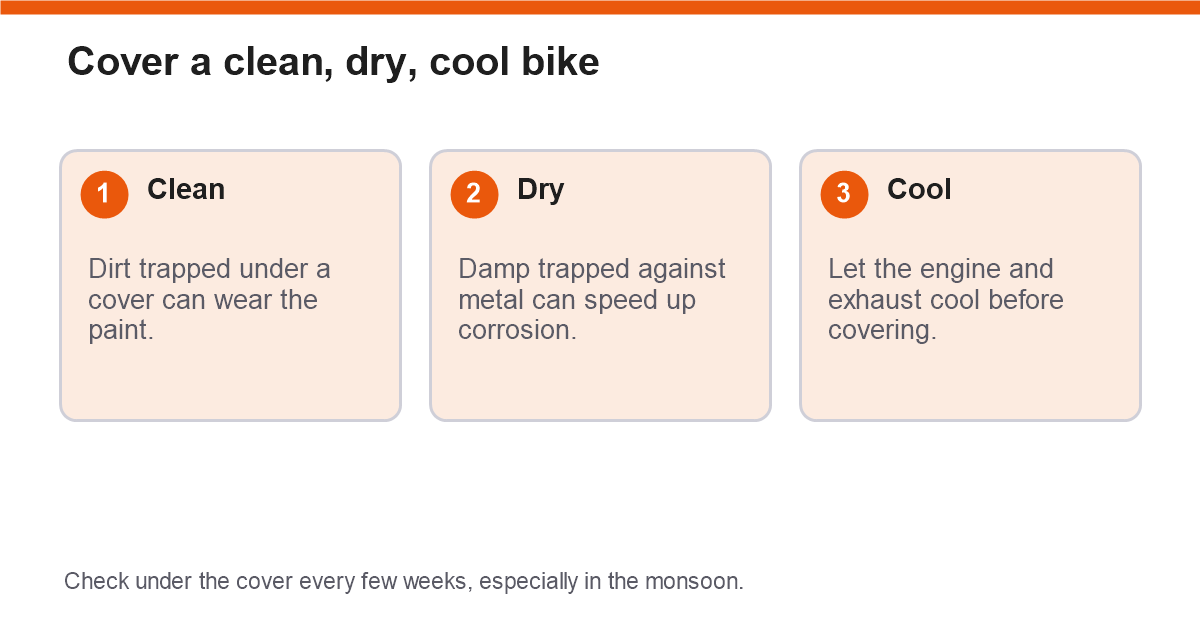
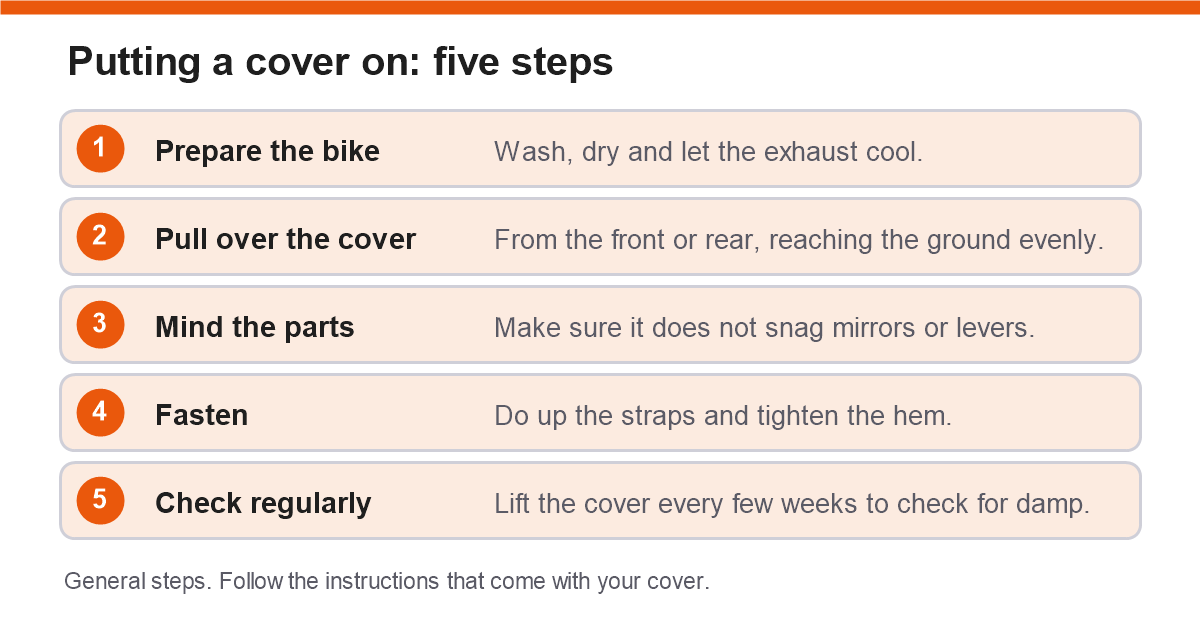
- Wash and dry the bike, because dirt and damp trapped under a cover can wear the paint and promote corrosion.
- Let the engine and exhaust cool before covering. Check the cover’s heat advice in its instructions.
- Pull the cover over from the front or rear, making sure it reaches the ground evenly without catching on mirrors or levers.
- Fasten the straps and tighten the hem.
- Lift the cover and check underneath every few weeks, especially in the monsoon.
Indian conditions
- Monsoon. Choose a cover with vents or breathable fabric, and dry the bike if it is wet before you cover it.
- Heat and sun. Check UV resistance. A pale colour reflects more sun than a dark one.
- Dust. A snug fit keeps dust out. Shake the cover out and wash it as the label advises.
- Coastal areas. Salty, humid air is hard on bikes. Check the bike regularly for corrosion, with or without a cover.
Mistakes to avoid
- Covering a wet, muddy or hot bike.
- Buying a cover sized by a generic label without measuring.
- Using a sealed plastic sheet for weeks.
- Leaving the cover loose so it flaps and rubs the paint.
- Relying on a cover as a lock.
Who may not need one
If you park in a secure garage with good ventilation, you may need only a light dust sheet. If you ride daily and park for short periods, a cover can be more trouble than it is worth.
A quick checklist before you buy
- Measure your bike with its accessories fitted.
- Decide whether you need an indoor or outdoor cover.
- Check for breathable fabric or vents.
- Check UV resistance and the lining.
- Check the straps, hem and lock eyelets.
- Check the washing instructions.
Frequently asked questions
Are waterproof covers bad for my bike?
A cover that is fully sealed with no ventilation can trap moisture. Choose a breathable or vented design, and check under it.
Can I cover a hot bike?
Let the engine and exhaust cool first. Check the cover’s heat advice.
Does a cover stop theft?
No. It hides the bike but does not secure it. Use a proper lock as well.
How do I clean a cover?
Follow the care label. Do not use harsh chemicals, and dry it fully before use.
Conclusion
Measure the bike, choose a breathable cover that suits where you park, and put it on a clean, dry, cool bike. When we add specific recommendations, they will be clearly labelled.
Related guides
- Saddle bags vs tail bags
- Essential accessories and checklist for long motorcycle trips
- Browse more in Motorcycle Protection.
Sources
- Cover guides from retailers and insurers were used for fit, breathability and moisture advice, for example Devitt Insurance and XLMoto. They are commercial sources, so rely on the maker’s specification for your cover.
- We did not find a source on cooling the exhaust before covering, so that advice is common sense. Check the instructions that come with your cover and your bike’s manual.