Researched guide. We have not tested the products or product types described here. Last reviewed: 15 November 2026.
A long drive goes better when the car, the paperwork and a few small items are sorted before you leave. The short answer: carry your documents in a form the police accept, check tyres and fluids, keep a first-aid kit and basic emergency items, and add comfort accessories only after the safety basics are covered.
Who this guide is for
- Drivers planning a long family or solo road trip in India.
- Anyone unsure which car accessories are essential and which are nice to have.
- Owners who want one checklist that links to our detailed guides.
Documents first
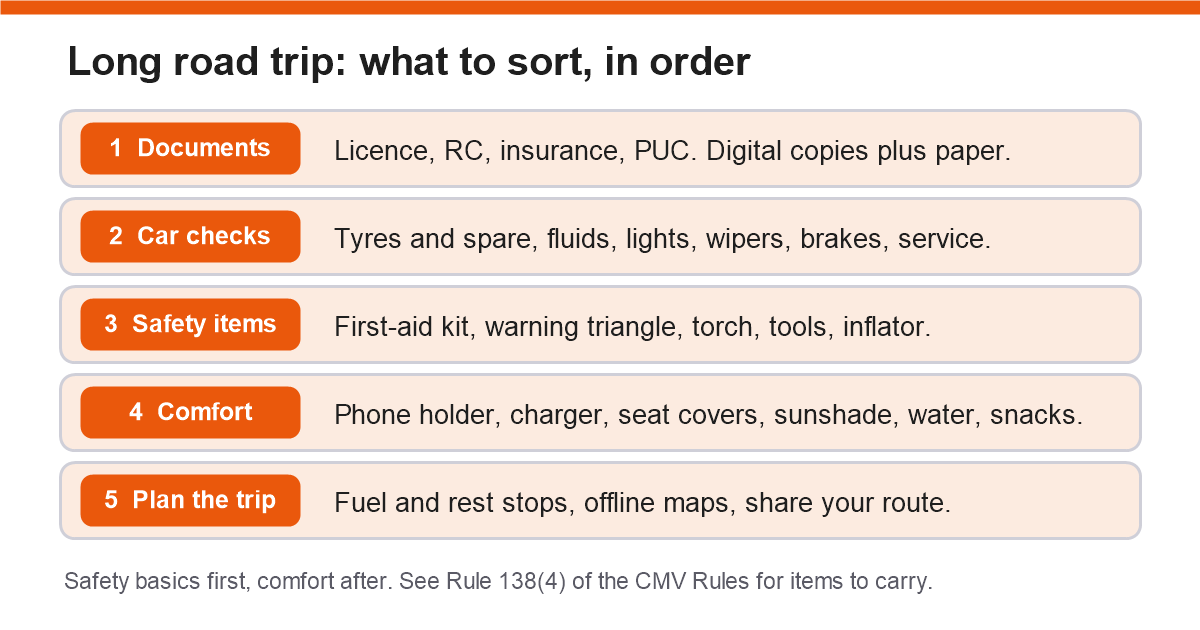
- What to carry. Your driving licence, the vehicle’s registration certificate, valid insurance, and a pollution-under-control certificate if applicable.
- Digital copies. A 2018 amendment to Rule 139 of the Central Motor Vehicles Rules, 1989 allows these documents to be shown in electronic form. The Ministry of Road Transport and Highways issued a procedure that refers to the DigiLocker and mParivahan apps. A photo kept in your phone’s gallery is generally not treated the same way, according to legal commentary we read, so use the apps.
- Keep paper copies too. Acceptance on the ground has varied, according to news reports, and phones run out of battery or signal.
Safety and emergency items
| Item | Why it matters |
|---|---|
| First-aid kit | Rule 138(4) of the Central Motor Vehicles Rules, 1989 lists a first-aid kit among the items to be carried in a vehicle. The contents were revised by a 2020 amendment, and we could not retrieve the exact list, so read the current rule and check your kit. |
| Warning triangle | The same rule refers to a warning triangle. We could not confirm from the sources we found whether it applies to your type of vehicle, so check the rule text. A triangle is a sensible item in any case. |
| Tyre inflator and puncture repair kit | A slow leak is a common problem. See our tyre inflator guide. Check your spare and its pressure too. |
| Jump starter | Useful if you may park in remote places. See our jump starter guide. |
| Torch and basic tools | For small roadside checks, especially after dark. |
| Dash camera | Records what happens ahead. See our dash cam guide for the Indian points on evidence and privacy. |
Check the car before you go
- Tyres. Check pressure when the tyres are cold, using the figure on the door-frame sticker or in the manual, and allow for a full load if the manual gives a separate figure. Check tread, cuts and bulges, and the spare.
- Fluids and lights. Check engine oil, coolant, brake fluid and washer fluid, and that all lights and indicators work.
- Brakes and wipers. Do not leave a known brake or wiper problem for the trip.
- Service. If a service is due soon, do it before you leave.

Comfort and convenience
| Item | Notes |
|---|---|
| Phone holder | Set navigation before you move, and mount it so it does not block your view. See our car phone holder guide for the Indian rules on phone use. |
| Car charger or power bank | See our guide to wireless vs wired car chargers. |
| Seat covers | Check airbag compatibility first. See our seat covers guide. |
| Sunshades | Help keep a parked car cooler in strong sun. Check they fit your windscreen and do not block your view while driving. |
| Organisers | Keep loose items off the floor near the pedals and off the rear shelf, where they can become projectiles in a sudden stop. |
| Water, snacks and a small blanket | For delays and for travelling with children or older passengers. |
| Cushions and neck pillows | Helpful on long stretches, but make sure they do not interfere with the seat belt or headrest. |
Loading the car
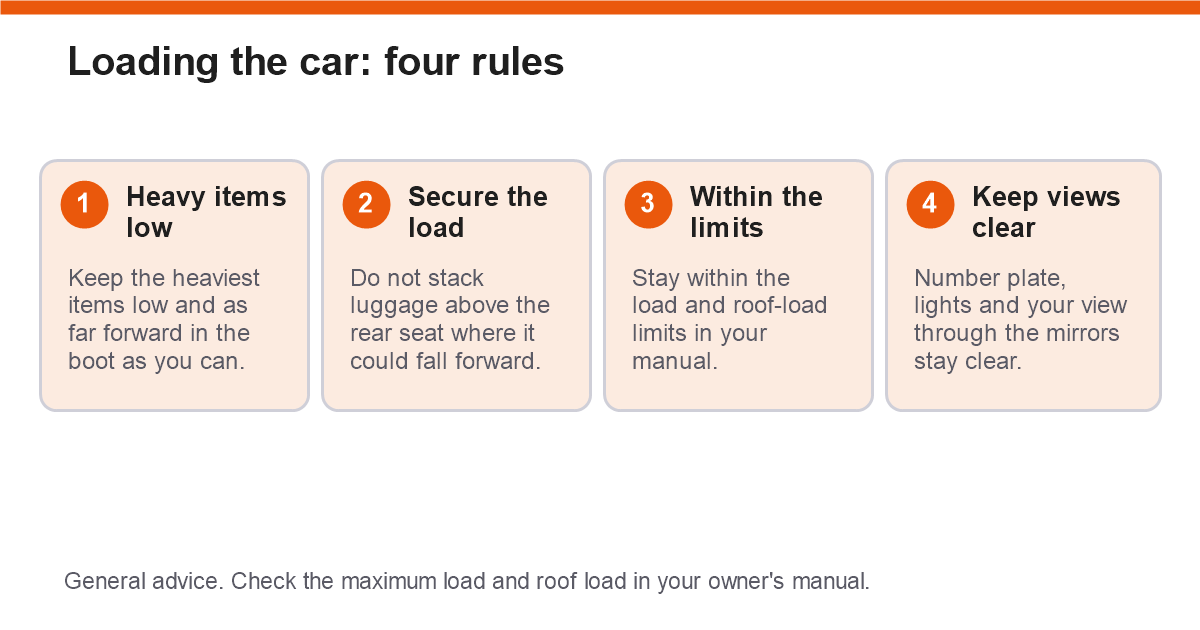
- Check your owner’s manual for the maximum load, and keep heavy items low and as far forward in the boot as you can.
- Do not stack luggage above the level of the rear seat if it could fall forward in a sudden stop.
- If you use a roof carrier, check the roof load limit in your manual, and that the carrier fits your roof rails.
- Keep the number plate, lights and your view through the mirrors clear.
Plan the trip
- Plan fuel and rest stops in advance, and download maps for offline use.
- Share your route and expected arrival time with someone.
- Take regular breaks. Tiredness slows reaction time, so stop before you feel exhausted.
- Avoid driving long stretches at night on unfamiliar roads where you can.
Weather in India
- Heat. Check tyre pressure when cold, keep water in the car, and do not leave children, pets or electronics in a parked car. Phones and power banks can get very hot.
- Monsoon. Check wipers, tyres and lights before you leave, allow more braking distance, and avoid driving through water of unknown depth.
- Cold at altitude. Mountain roads can be much colder than the plains. Carry warm layers and check your battery’s condition.
Mistakes to avoid
- Spending on accessories before checking tyres, brakes and fluids.
- Relying only on a phone for documents and navigation.
- Overloading the car or stacking luggage where it can fall forward.
- Skipping rest stops to save time.
Who may not need much
If you drive short trips and your car is recently serviced, the safety basics and documents may be all you need. Add the rest only if it solves a problem you have actually had.
A quick checklist before you leave
- Documents ready in the apps and on paper.
- Tyres, spare, fluids, lights and wipers checked.
- First-aid kit, triangle, torch and basic tools in the car.
- Inflator, and jump starter if you need one.
- Phone holder and charger set up, with navigation ready.
- Luggage loaded within the manual’s limit.
- Route, fuel and rest stops planned.
Frequently asked questions
Do I have to carry a first-aid kit?
Rule 138(4) of the Central Motor Vehicles Rules lists a first-aid kit among the items to be carried. The contents were revised in 2020. Check the current rule text for details that apply to your vehicle.
Can I show documents on my phone?
Electronic copies through the official apps are allowed under the 2018 amendment, but carry paper copies as a back-up. Check current guidance from your state’s transport authority.
Do I need a roof carrier?
Only if the boot cannot hold your luggage. Roof carriers add height and wind noise and have a load limit, so check your manual first.
Is a dash cam worth carrying?
It can help record what happens on the road, but footage does not guarantee a dispute will be settled. See our dash cam guide for the Indian points.
Conclusion
Sort the documents, check the car, carry the safety basics, then add comfort items that solve a real problem. When we add specific product recommendations, they will be clearly labelled.
Related guides
- Portable tyre inflators: complete buying guide
- Car jump starters: how to choose one
- Browse more in Car Travel & Utility.
Sources
- Central Motor Vehicles Rules, 1989, Rule 138(4) (items to be carried in a vehicle, including a first-aid kit) and Rule 139 (documents in electronic form). We could not open the current consolidated text, so read it on the Ministry of Road Transport and Highways site or India Code.
- Ministry of Road Transport and Highways: Standard Operating Procedure on electronic documents (we could not open the full text; this is the procedure reported in news and legal commentary).
- Your car’s owner’s manual is the authority on tyre pressures, load limits and roof loads.