Researched guide. We have not tested the products or product types described here. Last reviewed: 15 November 2026.
A long ride goes better when the bike, the gear and the paperwork are sorted before you leave. The short answer: carry your documents in a form the police accept, check the bike over properly, keep luggage low and within the bike’s limits, and pack a small kit for the problems that actually stop riders on the road.
Who this guide is for
- Riders planning a first long trip, such as a weekend away or a multi-day tour.
- Commuters who want to know what to carry on a longer ride.
- Anyone unsure which accessories are essential and which can wait.
Documents first
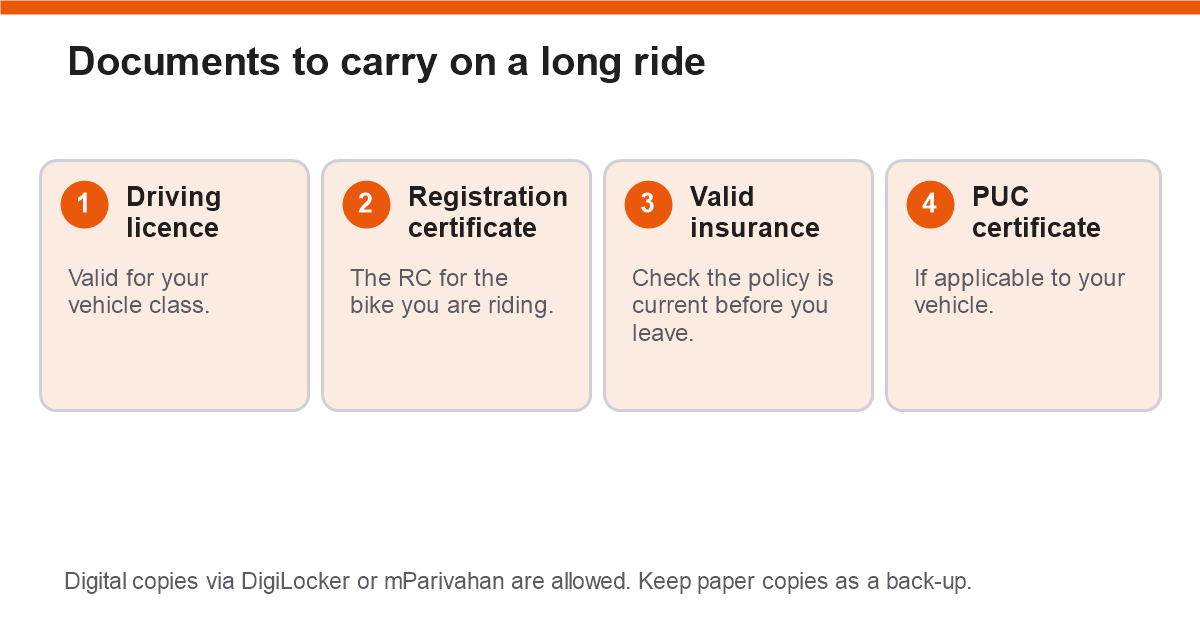
- What to carry. Your driving licence, the vehicle’s registration certificate, valid insurance, and pollution-under-control certificate if applicable.
- Digital copies. A 2018 amendment to Rule 139 of the Central Motor Vehicles Rules, 1989 allows these documents to be shown in electronic form. The Ministry of Road Transport and Highways issued a procedure that refers to the DigiLocker and mParivahan apps. A photo saved in your phone’s gallery is generally not treated the same way, according to legal commentary we read, so use the apps.
- Keep paper copies too. Acceptance on the ground has varied, according to news reports, and phones run out of battery or signal. Carry photocopies in a waterproof sleeve as a back-up.
- Helmet law. Section 129 of the Motor Vehicles Act covers riders and pillion passengers above four years of age. See our helmet guide.
Check the bike before you go
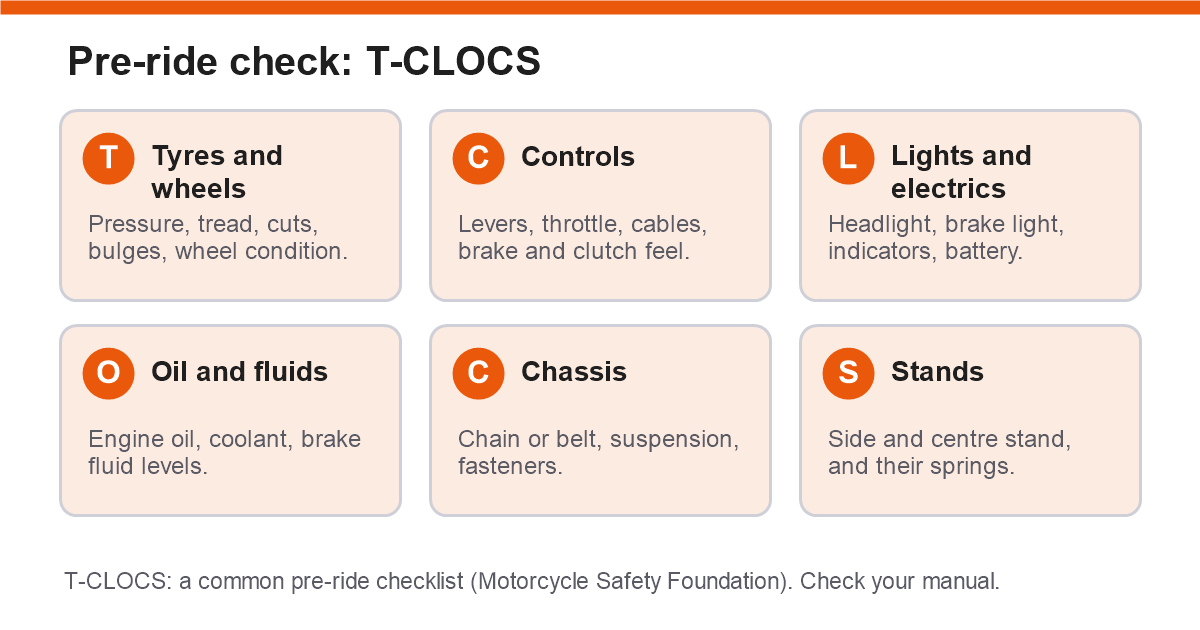
A commonly used pre-ride checklist is T-CLOCS, from the Motorcycle Safety Foundation: tyres and wheels, controls, lights and electrics, oil and fluids, chassis, and stands. Do it a few days before you leave, so you have time to fix what you find.
- Tyres. Check pressure against your bike’s manual, using the figure for a loaded bike or a passenger if the manual gives one. Check tread and look for cuts or bulges. See our tyre inflator guide for what to look for in a portable pump.
- Chain. Adjust it to the manual’s specification and lubricate it. Guides from tyre and insurance companies suggest checking tension and re-lubricating during long days of riding.
- Brakes, lights and fluids. Check pads, brake and clutch feel, all lights and indicators, coolant and oil levels.
- Service. If a service is due soon, do it before the trip, not during it.
Luggage: keep it low, balanced and within limits
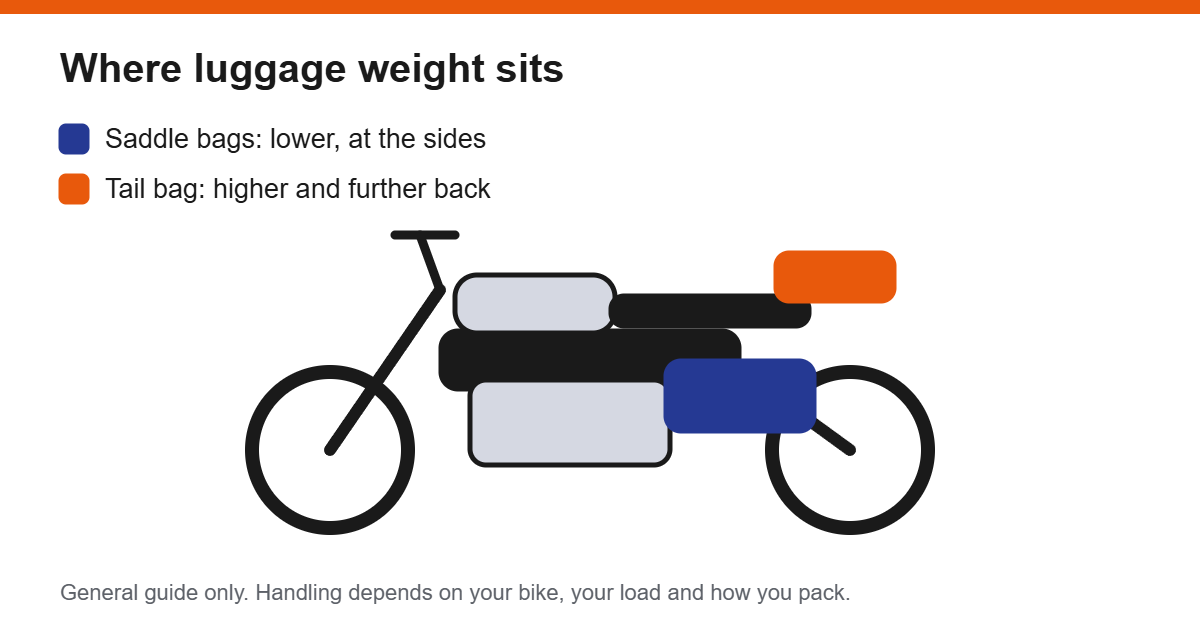
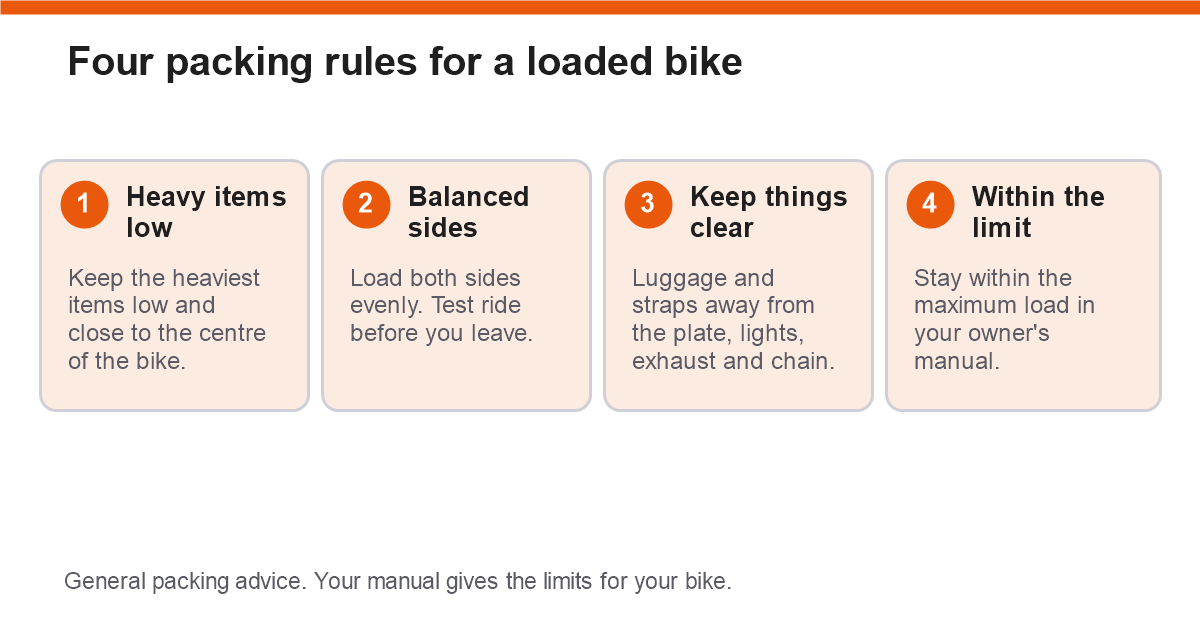
A loaded bike is heavier and takes longer to stop. Check your owner’s manual for the maximum load, and keep heavy items low and close to the centre of the bike. Our saddle bags vs tail bags guide compares the options.
- Load both sides evenly.
- Keep luggage clear of the number plate, lights, exhaust and chain.
- Do a short test ride with the loaded bike before you set off.
- Pack less than you think you need. Extra weight changes handling.
The kit worth carrying
| Item | Why |
|---|---|
| Riding gear: helmet, jacket, gloves, boots | See our gloves guide. Add a rain layer for the monsoon. |
| Puncture repair kit and a pump | A flat tyre is one of the most common reasons to stop. Check that the pump is rated for your tyres. |
| Basic tools from your bike’s tool kit | For small adjustments. Leave major work to a workshop. |
| Chain lubricant | For re-lubricating on multi-day rides. |
| Torch or headlamp | For roadside checks after dark. |
| First-aid kit and any personal medicines | For small injuries and delays. |
| Power bank and charging cable | For your phone, if you use it for navigation. Use a proper motorcycle mount rather than holding it. |
| Waterproof bag liners or covers | To keep the contents dry in heavy rain. |
| Water and a few snacks | To stay hydrated and alert between stops. |
Plan the ride
- Plan fuel and rest stops in advance, and do not rely on a single source of navigation.
- Download maps for offline use in case you lose signal.
- Take regular breaks. Tiredness reduces reaction time, so stop before you feel exhausted.
- Share your route and expected arrival time with someone.
- Avoid riding after dark where you can, particularly on unfamiliar roads.
Weather in India
- Monsoon. Carry a proper rain layer and waterproof covers, and allow more braking distance on wet roads.
- Heat. Wear ventilated gear that still carries protection, drink water often and plan breaks in the shade.
- Cold at altitude. Mountain rides can be much colder than the plains. Pack warm layers and gloves with insulation.
Mistakes to avoid
- Leaving without checking tyre pressure or the chain.
- Overloading the bike, or loading one side more than the other.
- Relying only on digital documents on a phone with a low battery.
- Skipping rest stops to save time.
A quick checklist before you leave
- Documents ready in the apps and on paper.
- T-CLOCS check done, and any service completed.
- Tyre pressure set for the loaded bike.
- Luggage packed low, balanced and within the manual’s limit.
- Riding gear and rain layer packed or worn.
- Route, fuel stops and rest stops planned.
Frequently asked questions
Do I need to carry original documents?
Electronic copies through the official apps are allowed under the 2018 amendment, but carrying paper copies as a back-up is sensible. Check current guidance from your state’s transport authority.
How much luggage can my bike carry?
Your owner’s manual gives the maximum load. We cannot give a general figure, because it differs by bike.
How often should I stop?
There is no single number. Stop before you feel tired, and more often in heat or heavy traffic.
Do I need a tyre inflator?
A small pump and a puncture repair kit give you a way to deal with a slow leak, but they are not a substitute for a proper repair. Check that your pump suits your tyres.
Conclusion
Sort the documents, check the bike, pack light and low, and carry a small kit for the common problems. When we add specific product recommendations, they will be clearly labelled.
Related guides
- Saddle bags vs tail bags: which should you choose?
- Motorcycle phone mounts: a complete buying guide
- Browse more in Motorcycle Luggage & Storage.
Sources
- Ministry of Road Transport and Highways: Standard Operating Procedure on electronic documents (we could not open the full text; this is the procedure reported in news and legal commentary).
- Motor Vehicles Act, 1988, Section 129, as quoted in the Bombay High Court judgment Project Revolt LLP v. Bureau of Indian Standards.
- Carole Nash: Preparing a motorcycle for long distances. Michelin and other tyre and insurance guides were used for general pre-ride advice.
- Your bike’s owner’s manual is the authority on load limits, tyre pressures and chain adjustment.